He uses an IKEA desk that measures 23.5 x 47 inches to keep the office compact and the room easy to move around. A KERDOM ergonomic chair with a breathable mesh back supports long stretches of work, so the day stays productive and comfortable.
The desktop stays clear except for a laptop, which removes visual clutter and speeds transitions between tasks. Smart storage choices tuck essentials into a filing cabinet, a small drawer unit, or wall organizer so supplies and paper stay hidden but ready.
Good design favors light and flow. Shelves, a monitor stand, and a slim file unit maximize the limited space. These solutions help keep things neat, make cable and charging management simple, and protect time for focused work.
This guide will show practical options to organize notes, files, and desktop items so the office looks consistent and supports daily productivity.
Establishing a Foundation for Your Minimal Workspace
A thoughtful layout sets the tone for calm, focused work.
He begins by assessing the room to make sure every piece serves a purpose. Sam Zoldock, a commercial real estate professional, argues that good small office organization directly improves workflow and reduces stress. This step often means a ruthless purge of items that no longer help daily goals.
Defining Minimalist Layouts
Symmetry and balance matter: arrange the desk so tools and tech are easy to reach and visually aligned. A clear arrangement reduces visual noise and promotes long stretches of productivity.
The Importance of Clear Surfaces
Clear surfaces create a dedicated area for focus. Natural light should be prioritized to boost mood and cut eye strain during long hours.
Choose a chair that supports posture. Keep paper to a minimum and build an organization habit that connects home order with a professional office feel.
“A well-designed home office layout significantly improves workflow and reduces stress associated with a chaotic environment.”
- Assess each item on the desk.
- Keep only what is used daily within arm’s reach.
- Follow small-room home office tips to refine the plan: small-room home office tips.
Essential Minimal Workspace Storage Ideas for Small Desks
Smart, compact solutions let a small desk hold everything without looking crowded.
The author uses an 8-cubby vertical unit to squeeze more use from limited floor and desktop space. Every cubby gets a purpose so the home office stays tidy and orderly.
Keep essentials like a stapler, tape dispenser, and calculator in a shallow tray to clear the desktop of clutter. A small desktop organizer holds paperclips, sticky notes, and pens so those little things do not scatter.
Use a drawer or dedicated organizer for charging cables to avoid tangled cords. A monitor stand creates under-desk room for a file or drawer unit for paper and files.
- Use each cubby for a specific supply or gadget.
- Label a cabinet for notes and important paper so documents stay accessible but out of sight.
- Choose options that match the desk setup to keep the system practical for daily work.
When every item has a home, searching time drops and focus rises.
Maximizing Vertical Space with Wall Solutions
Walls offer untapped real estate that can reshape how a desk functions. By lifting supplies off the surface, a room gains calm and efficiency. The right wall plan keeps the office neat and saves time during busy days.
Floating shelves add both style and purpose. They hold books, decor, and an organizer for paper or charging accessories. A slim wall unit can tuck a file or small cabinet above the desk so the desktop stays clear.
Floating Shelves
He favors shallow shelves to keep the desk line clean. Floating options create display space while matching the room’s design. Install two or three staggered shelves to balance function with style.
Pegboards and Grids
Pegboards and metal grids turn a wall into a custom tool panel. Hooks, baskets, and cable clips make scissors, chargers, and small supplies easy to see and reach.
- DIY clipboard wall: nine clipboards can tame paper clutter in under an hour.
- Pegboards let you rearrange as needs change, an ideal option for a growing office.
- MicroFlex LLC demonstrates how integrated wall units support business-scale office design and productivity.
“Going vertical is like finding a secret storage room; every inch becomes useful.”
Implementing Drawer Systems for Hidden Organization
Under the desk, stackable drawers let an office keep essentials close without crowding the desktop. He uses 3-drawer plastic units in two towers, four sets each, placed on either side of the desk.
These drawer towers store small items like markers, sticky notes, and charging cables. Each drawer is labeled so he finds things fast during a busy work day.
Keeping paper and supplies tucked away maintains a light, neat surface for focused tasks. The units act like a movable cabinet, so the setup adapts when the room needs to change.
- Use shallow drawers for daily supplies to cut search time.
- Reserve one drawer for charging gear to avoid cord clutter.
- Choose lightweight towers for easy relocation and cleaning.
“A well-organized drawer system is the secret to keeping your things in order.”
Managing Paperwork Without Creating Clutter
Paper piles can quietly take over a desk if there isn’t a clear plan to process them. A simple daily routine keeps an office calm and prevents piles from becoming a distraction.
Color-Coded Filing Systems
The System of Three helps: shred, file, or take action. Sort mail and documents into these three paths to stop papers from lingering on the desk.
Color-coded folders speed decisions. Assign a color to bills, one to receipts, and one to active projects. Label each folder so finding a file takes seconds, not minutes.
- Keep a dedicated file cabinet or tray for long-term documents to free desktop space.
- Use a vertical organizer for old blog receipts and loose notes to save surface area.
- Process your paper inbox every day so items do not pile up and cause clutter.
“Every piece of paper should have a designated home.”
Consistent categorizing reduces stress and helps you focus on work. When every paper has a place, the office stays usable and balanced.
Optimizing Cable Management for a Clean Look
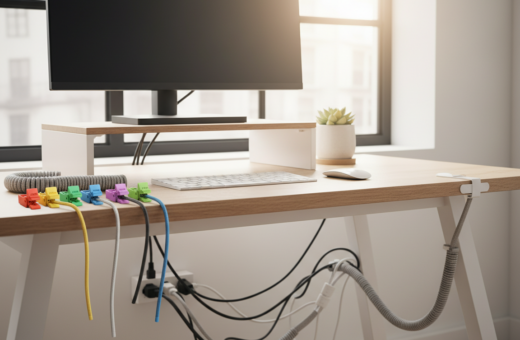
Taming cords is one of the fastest ways to make an office feel orderly. He uses a Tessan power bar with eight outlets, three USB ports, and a six-foot cord to charge a laptop, phone, and accessories without tangles.
Because the power bar has a flat plug and slim cord-drop, it lies nearly flush against the wall. Sliding it behind a cabinet or under the desk saves valuable space and keeps the desktop clear.
Bundle cables with reusable ties and label each line so identifying the phone charger or monitor cable takes seconds. Mounting the surge protector under the desk hides most cords and keeps the floor tidy.
- Use a monitor riser to route cables out of sight and create room for a slim cabinet or drawer beneath.
- Tag and group power lines by device to cut search time during a busy work day.
- Keep charging gear on a single power strip to avoid scattered cords and reduce clutter.
“Proper cable organization removes visual noise so the design of your office supports productivity.”
Selecting Multi-Functional Furniture Pieces
Multi-use furniture turns tight corners into practical work zones. He looks for pieces that add function without crowding the room. The right selections keep the desk clear and the office calm.
Ladder Desks
Ladder desks use vertical space to add shelves above the surface. They free floor area and hold books, a monitor, or a lamp. A ladder desk makes it easy to keep paper and supplies off the desktop.
Fold-Down Workstations
A fold-down workstation hides work when the day ends. It is an ideal option for a home room that doubles as another function. Choose one with built-in drawers or a small cabinet for charging cords and files.
Slim Filing Cabinets
Thin filing cabinets act as a side table and a storage unit. Place a printer on top and file paperwork inside. Every cabinet should earn its keep by blending design and function.
- Prefer desks with hidden drawers to keep items organized.
- Use vertical storage to save surface area for the monitor and keyboard.
- Measure the layout before buying to ensure a good fit.
Incorporating Desktop Risers and Trays
A monitor riser is a quick way to create extra space on the desk. He places the screen on a raised platform and uses the area underneath for papers and a slim cabinet.
Stackable trays manage paper and active projects. They keep the desktop clear and make filing faster. Trays that match the office style also keep the room cohesive.
A small desktop organizer with a drawer hides pens and charging cables. This simple addition reduces clutter and keeps essentials close at hand.
Use vertical space on the desk with a tiered riser or a low shelf. Options range from a plain wooden platform to risers with built-in drawers or cubbies.
- Use a riser to free under-monitor space for paper and a slim drawer.
- Choose stackable trays to sort incoming mail and current projects.
- Pick an organizer that tucks cords and small items out of sight.
“Every item should have a home; risers and trays make that simple in a compact office.”
A well-organized desktop supports a productive day. With the right trays and riser, the desk becomes a tidy, efficient setup for daily work.
Utilizing Creative DIY Storage Hacks
Repurposing common household items lets you design custom organizers on a budget. This approach keeps the desk tidy and gives the office a personal touch.
Upcycling tin cans or glass jars makes a quick pen holder that suits the desktop. Cardboard tubes tame cable runs so chargers and cords stay untangled.
Upcycling Household Items
Build drawer dividers from cereal boxes to sort supplies and keep each drawer dedicated to a task. A folded box or a slim cabinet insert makes paper and notes easy to find.
A DIY wall organizer converts scrap wood or pegboard into a holding space for documents and small tools. These projects free surface area and create clear space for focused work.
- Use jars for pens and small items.
- Turn boxes into stylish file holders for the desk.
- Roll cables into tubes to prevent tangles.
“Simple DIY projects reduce waste and give the office a unique, functional style.”
Maintaining Your Organized Environment Daily
A short end-of-day routine prevents clutter from taking over the office.
He commits to putting each item back in its place when he finishes work. This simple habit keeps the home office calm and makes the next day easier.
Spend ten minutes at the end of the day to clear paper and other loose items. A quick sweep of the desk reduces stress and restores the usable space for the next session.
Make it enjoyable: set a timer, play a favorite song, and tidy with purpose. Turning cleanup into a short ritual helps keep things consistent.
- Daily reset: return gadgets and office tools to their labeled homes.
- Ten-minute clear: file or trash paper, and stow active items.
- Routine wins: steady organization supports long-term productivity.
“A clean workspace reflects a clear mind.”
He remembers the office will evolve. Regular decluttering prevents excess items from creeping in and keeps life and work running smoothly.
Conclusion
, He closes the guide by reminding readers that small choices shape a calm home. Thoughtful habits and the right pieces make work feel purposeful and easy to sustain.
In practice, use vertical options and clear systems so the workspace keeps a tidy, consistent look. Spend a few minutes each day to file or recycle loose paper and return tools to their spots.
By planning and staying consistent, anyone can turn a crowded room into a productive home office that reflects their work life. These steps help keep focus, reduce stress, and make each day simpler.