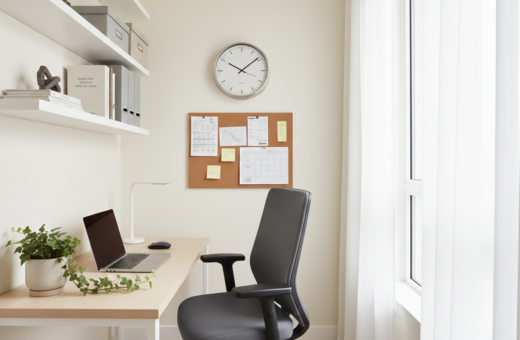
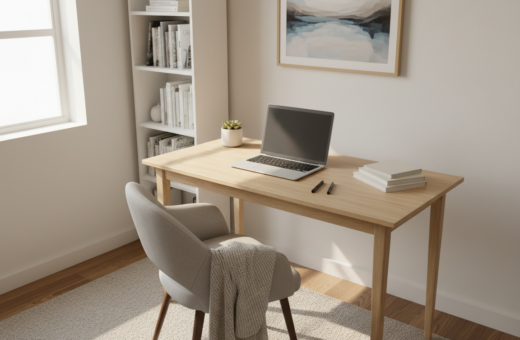
Creating a functional home office in a compact living space starts with a clear layout. A small corner can serve as a productive workspace when the right desk and furniture are chosen.
They should pick a desk that fits the room dimensions and add shelving or storage to keep things tidy. Natural light and good lighting help sustain energy through the work day.
Every person working home full time benefits from a distinct area that separates work from relaxation. Smart office space planning keeps the living area calm while providing table surface and chairs for focused tasks.
Practical design balances form and function. With the right layout, small spaces become efficient setups that support routine, comfort, and productivity.
Finding the Ideal Spot for Your Workspace
Selecting the right spot for a work setup starts with mapping every corner and measuring real usable space. A quick floor sketch helps decide if a desk fits comfortably without blocking pathways. This step prevents future layout headaches and keeps the living area functional.
Evaluating Nooks and Corners
Look at every corner and side of a room to find underused areas. Positioning a desk near a window offers natural light that boosts focus and mood.
“Designers like Oholendt recommend roughly 10×13 feet if you plan to float a desk and add cabinetry,”
- Measure to ensure circulation around desks and storage.
- Consider placing desks against a wall when space is tight.
- Floating a desk works only if the room really has the space for it.
Prioritizing Quiet Zones
Identify low-traffic areas away from the kitchen and living room. A calm workspace on the side of a room reduces interruptions and supports long focus sessions.
Choosing the right place for your home office is the first step toward a practical, comfortable setup that balances work and daily life.
Essential Shared Apartment Home Office Ideas
A practical setup for two relies on defined zones, tidy desks, and smart storage solutions.
Clear communication is the first step. Each person should agree on schedules, noise limits, and desk boundaries to avoid conflict.
Using a room divider helps define a workspace without construction. A thin partition or shelving unit can hide a printer and keep clutter out of sight.
Oholendt recommends roughly 8×10 feet for a built-in desk and cabinets. That footprint fits a compact layout with a shared cabinet for supplies and a pair of neat desks.
- Keep desktop surfaces clear to maintain a professional feel.
- Assign one shelf or drawer per person for personal supplies.
- Choose vertical storage that frees floor space.
These essential tips balance privacy and collaboration. They maximize limited square footage while keeping the living area calm and functional for everyone.
Selecting Furniture That Maximizes Small Footprints
When floor area is tight, each piece of furniture must pull double duty. A clear layout starts with choosing items that save room and improve daily function.
Choosing Multifunctional Pieces
Multifunctional furniture turns one surface into many. A table that doubles as a desk frees floor space and keeps things tidy.
CORT.com offers short-term rental options so a person can test a desk or chair before committing. Renting lets them match scale and style to the room quickly.
- Select pieces that serve clear purposes to maximize usable space.
- Use wall-mounted shelving for storage without losing floor area.
- Consider the kitchen counter as a temporary desk when desks are tight.
- Invest in quality furniture so the workday remains comfortable and durable.
“Choose items that reduce clutter and support long hours of focused work.”
Creating Visual Boundaries Without Walls
Simple visual cues can make a compact living area feel like a separate work zone.
Use a bookshelf as a divider to form a distinct office space that still lets light pass through. A tall shelf can hold files, plants, and a lamp while acting as a subtle partition between the desk area and the rest of the room.
Place rugs or a splash of color to mark the workspace. These touches help people mentally switch into work mode and give the area its own style without construction.
Position desks to face a window for natural light or toward a wall to reduce distractions. A slim divider beside desks keeps the living area open while creating a clear work boundary.
- Choose textured textiles and layered lighting to add professionalism.
- Keep pathways open so the area feels like part of the larger living design.
- Assign one shelf or small cabinet per person for tidy storage.
“A well-designed space uses light and texture to create a professional atmosphere,”
Optimizing Vertical Storage for a Clutter-Free Desk
Stacking upward frees valuable floor area and keeps the desk clear for work. Wall-mounted shelving and a tall bookshelf provide the extra room needed to store files, tech, and supplies without crowding the surface.
Install shelves above the desk to hold reference books, chargers, and small bins. That keeps essential things within reach while leaving the desktop open for tasks.
Every person working from home should clear their desk at the end of the day. A quick tidy resets the workspace and makes mornings easier.
- Choose a sturdy bookshelf to centralize supplies and reduce desktop clutter.
- Use labeled baskets on shelving so everyone finds things fast.
- Mount a pegboard or small wall organizer for cables, scissors, and pens.
Vertical storage maximizes small room layouts and makes even a tight space feel professional. A clean desk improves focus and helps the home remain a relaxing place to live.
Leveraging Natural Light and Ambient Illumination
Positioning work areas to catch daylight can change how productive a person feels during the day. Natural light improves mood, reduces fatigue, and makes a small space feel larger.
Positioning desks near windows
Positioning Desks Near Windows
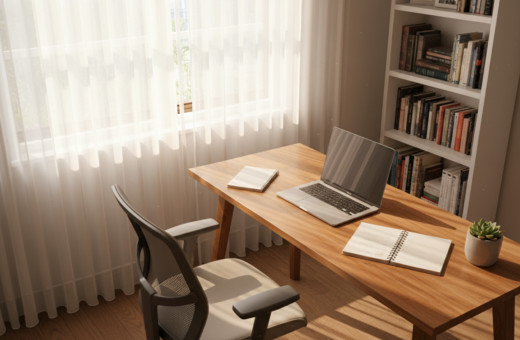
Place a desk so the window sits to the side or behind a monitor to cut glare. Designers recommend sheer curtains on the side of the window to soften harsh rays while keeping the room bright.
When a table or corner desk faces the window, it gives a pleasant view and steady daylight. Each person should consider desk placement to make the most of available light.
Layering Task Lighting
Layer lighting by combining ambient fixtures with focused task lamps. A warm overhead light paired with an adjustable desk lamp prevents shadows and helps on late shifts.
- Use a focused task lamp for reading and screen work.
- Add an ambient fixture or floor lamp to lift the entire area.
- Choose compact furniture and lamps that fit the room scale.
“Proper lighting design is an essential part of creating a comfortable and efficient home office setup.”
Establishing Shared Office Etiquette
Simple agreements about timing and sound can prevent daily friction in tight quarters. A short set of rules helps two people protect focus, respect needs, and keep the work routine steady.
Communicating Schedules
Share calendars or hang a whiteboard so everyone sees meetings and deep-focus blocks at a glance. A visible schedule reduces interruptions and sets clear expectations.
Managing Noise Levels
Use headphones instead of speakerphone for calls. This one habit cuts distractions and preserves a quiet environment for the other person.
“Treat noise like a shared resource: respect it, measure it, and reduce it when possible.”
Handling Shared Supplies
Keep pens, staplers, and chargers in a labeled cabinet or bin so things are easy to find. Agree who replaces staples or ink to avoid small conflicts.
- Invest in comfortable chairs and an organized desk to support long hours.
- Designate one shelf per person for personal storage and quick access.
- Check in weekly to adjust schedules, storage needs, or furniture placement.
Managing Tech and Cable Clutter
Taming cords and gadgets clears mental space and keeps a desk looking professional. A neat tech area makes the room feel larger and supports focused work.
Use cable clips, sleeves, and adhesive channels to route cords behind the desk or along the wall. This low-cost approach hides cables and protects plugs.
Whenever possible, go wireless. Bluetooth keyboards, mice, and earbuds cut the number of things on the surface and reduce tangle risks.
Keep extra chargers and cables in labeled bins or a small drawer for quick access. Proper storage prevents rummaging and keeps the shared office setup functional.
A short weekly tidy resets the space and spotlights any worn cords that need replacing. A clean desk is a productive desk; organizing tech this way saves time and improves the overall setup.
“Organize cables once, and your daily routine becomes smoother.”
- Tuck cords with clips or sleeves.
- Favor wireless devices to shrink clutter.
- Store spare chargers in labeled containers.
Incorporating Personal Touches and Greenery
A few personal touches can turn a compact work nook into a place that feels calm and productive.
Low-maintenance plants like snake plants, Pothos, ZZ plants, and succulents add life without daily care. Placing a small plant on the desk or a tall plant in a corner lifts mood and cleans the air.
Choose a calming paint, such as Blue Bayou by Benjamin Moore, to help the area feel tranquil. Soft color plus layered lighting makes a small space read as larger and more focused.
“Personal touches—plants, color, and a scent—help the work area reflect individual style.”
- Add a Carrière Frères candle with notes of absinthe for a subtle creative boost.
- Keep one shelf for personal memorabilia to avoid clutter and preserve shared storage.
- Use a small succulent on the side of the desk when space is tight.
These simple home office ideas make the room feel purposeful and personal. For inspiration on blending outdoor elements into a compact setup, see outdoor-inspired home office.
Developing a Daily Shutdown Routine
A simple shutdown ritual helps people close their work day and reclaim the living space. A short, repeatable routine signals the brain that work is over and makes the room feel restful again.
Each person should clear their desk, tuck in their chair, and fully shut down their laptop at the same time each day. These actions are quick but powerful. They stop tasks from lingering and prevent the setup from creeping into personal hours.
Storing work things in a dedicated storage area makes mornings easier. Put chargers, notebooks, and peripherals in labeled bins so the shared office can reset fast for the next day.
“A consistent end-of-day routine protects focus and preserves the home office as a place for both work and rest.”
- Clear the desk surface and close active tabs.
- Tuck the chair under the desk and power down devices.
- Store essentials in a single, labeled container.
Following this routine every day gives each person the mental space to relax. It is a simple way to balance working home needs without letting the office take over life.
Conclusion
With sensible design choices, even a compact room can support focused, full‑time work. Small changes add up: clear routines, tidy storage, and reliable lighting create calm and productivity.
Keep pathways open and use vertical shelves to free floor space. A consistent shutdown at the end of the day saves time and reduces clutter. These home office ideas help a room feel professional without a full remodel.
When people agree on simple rules and invest in a comfortable desk, the result is a pleasant, efficient room that fits daily needs. Small spaces can become lasting, productive places to work.