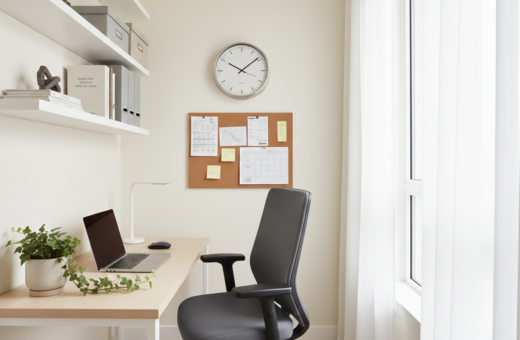
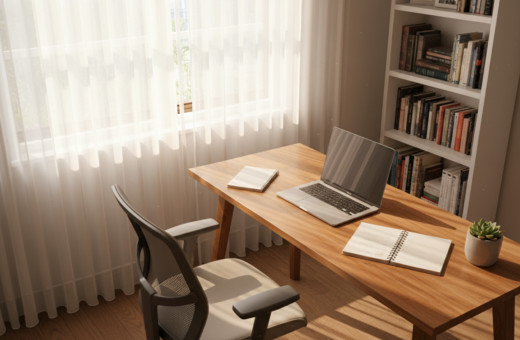
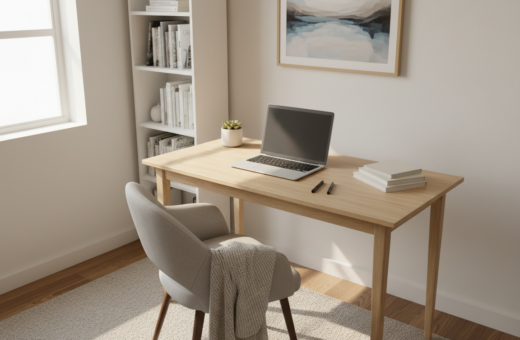
Smart choices make a small room feel organized and calm. By placing essentials within reach, people turn a bedroom or living area into a reliable home workspace.
The Branch Daily desk, at 28.5″H x 36″W x 24″D, shows how a professional workstation fits into limited space. Choosing the right table or standing option helps keep a laptop, light, and chair arranged for comfort.
Modern design uses vertical storage and cabinets to free the floor. This keeps storage accessible while preserving room function and style.
A clear setup helps separate work and personal time. With careful measurements, even apartments can gain a focused area that supports posture, productivity, and long-term comfort.
The Benefits of a Foldable Desk Layout for Tiny Spaces
A convertible work surface helps people switch quickly between office mode and living mode. A well-chosen foldable desk layout for tiny spaces lets residents reclaim the floor after the workday. It supports a neat home workspace that does not dominate a bedroom or studio.
Productivity Gains
Clear surfaces and easy stowaway options reduce distraction and boost focus. The West Elm Parker Mini, at 36″ W, fits a laptop and papers without crowding the room.
Space Optimization
Lightweight pieces move between rooms and store in closets when not in use. The Made by Choice Fem Work Desk, at 41″ H, shows how a standing workstation can convert to a seated table.
- Stability: Choose tables with sturdy legs for long sessions.
- Storage: Pair a cabinet or vanity nearby to hide supplies.
- Flexibility: Ideal for apartments that double as dining areas.
Simple lighting and an ergonomic chair complete the setup and help maintain comfort and productivity all day.
Wall-Mounted Solutions for Minimalist Workspaces
Mounting a slim work surface to a wall instantly clears floor area and simplifies a minimalist office. This floating approach removes bulky legs and makes a small living area feel more open.
Many wall-mounted pieces include integrated storage, so a laptop, papers, and supplies tuck away without a separate cabinet. Adjustable height options keep the workstation comfortable during a long day and support standing or seated use.
The design often favors clean lines and natural materials to match bedroom or apartment furniture. Placing the setup near a window adds natural light, which boosts productivity and reduces eye strain.
- Use vertical space: mounts free the floor and expand usable area.
- Integrated storage: keeps office items neat and hidden.
- Flexible comfort: height options fit different body types.
For those who work from home, a wall-mounted solution offers a tidy, stylish option that blends into existing décor while delivering real functionality.
Maximizing Verticality with Ladder-Style Desks
A ladder-style frame turns a narrow wall into a tall, useful workstation that saves floor area. These pieces stack shelves above a working surface so the room keeps breathing while providing handy storage and a tidy table surface.
Vertical storage benefits include easy access to books, a laptop, and office supplies without needing a bulky cabinet.
- Stable setup: leaning frames like the West Elm Blaine Wall Desk (77.5″ H) offer secure support without permanent installation.
- Customizable shelves: add or rearrange boards to grow storage and functionality over time.
- Corner-friendly: tall, narrow furniture fits along a small wall or next to a bed in apartments.
Made from wood or metal, these units pair form and function. With a clip-on lamp and a proper chair, a ladder-style desk becomes a comfortable, productive workstation that keeps the floor clear and the area organized.
Corner Desks for Overlooked Nooks
A corner workstation can turn an unused nook into a focused area that feels purpose-built. The Tangkula Corner Desk, at 33.5″ W, is an example of a compact piece sized to fit a right angle without crowding the room.
Use the corner to save floor area. Triangular surfaces provide a stable table for a laptop and papers while freeing the center of the living room or bedroom.
Many models add built-in storage shelves beneath the work surface. This keeps supplies tidy and reduces clutter during the day.
“A small corner setup can create a dedicated workspace that feels separate from the rest of the home.”
- Compact footprint fits apartments and narrow areas.
- Choices in wood or metal match most furniture and design styles.
- Pair with task lighting and a supportive chair to improve comfort and productivity.
For those seeking an efficient office option, a corner setup delivers functionality without sacrificing style.
Floating Shelves for Open Floor Plans
A wall-mounted shelf can act as a discreet workstation that preserves sightlines and flow. This piece keeps the living area open while offering a stable surface for a laptop and quick tasks.
Floating shelves let a homeowner place storage and a work surface without bulky legs. They tuck against the wall, so the floor stays clear and the room feels larger.
Height is easy to adjust during installation, which helps maintain good posture and comfort while they work. Placing the shelf near a window increases natural light and can boost productivity.
- Minimal footprint: blends into living or bedroom décor.
- Easy to clean: no legs means quick floor access.
- Flexible use: a secondary workstation or a primary table for short sessions.
With a supportive chair and a tidy storage cabinet nearby, a floating shelf becomes a stylish, functional option for modern apartments and open-plan offices.
Multi-functional Console Tables
A narrow console table can double as a productive workstation without overwhelming a hallway or living room.
Console tables are a clever desk option for small homes. Their slim profile makes them ideal in a short corridor or along a bedroom wall.
During the day they offer a steady surface for a laptop and notes. In the evening they transform into an entryway piece with decorative accents.
- Storage: drawers hide supplies and keep the office neat.
- Stability: choose models with sturdy legs to support daily use.
- Versatility: move the piece between rooms as needs change.
Pair a compact chair and a focused lamp to define the workspace and boost productivity. These tables support a minimalist design while adding real functionality to apartments and living areas.
Mobile Carts for Flexible Workstations
Mobile carts let a person move an entire workstation around the home in seconds. They make it easy to shift a productive setup between the bedroom, living area, and dining table without heavy lifting.
Portability features include lockable wheels on sturdy legs and lightweight frames that roll smoothly across floors. A model like the Blu Dot Stash Reversible Desk (42″W x 24″D) shows how a mobile piece can blend storage and surface area.
Storage Capacity
Many carts offer multiple shelves and a shallow drawer to keep a laptop, papers, and supplies within reach. Organizers slide onto shelves so each item has a place, which reduces clutter when the cart is tucked away.
- Moveable: roll between rooms to match daily routines.
- Compact storage: shelves hold books, a lamp, and a small cabinet organizer.
- Durable build: stable frames protect equipment while in transit.
As a result, mobile carts give small apartments an adaptable option that supports productivity without a permanent footprint.
Murphy Desks for Clutter-Free Living
A wall-mounted folding cabinet turns an idle wall into an efficient work area that disappears at the end of the day.
Murphy desks, such as the Article Fantol Cabinet Desk at 42″W x 24″D, fold up into a sleek cabinet when not in use. This saves floor space and keeps the living area tidy.
The design often includes hidden storage so a laptop, papers, and office supplies tuck away after work. They mount to the wall, which makes the piece very stable and comfortable for daily use.
Lower it to work and fold it back to reclaim the room. Many finishes match existing furniture, letting the cabinet blend with decor and preserve a calm bedroom or studio look.
- Clutter control: hidden storage keeps items out of sight.
- Dual-purpose: the table becomes a cabinet when not needed.
- Stable setup: wall mounting improves support compared to free-standing options.
For apartment dwellers who need a dedicated workspace without sacrificing design, a Murphy cabinet is a smart, space-saving option that boosts productivity and comfort.
Integrating Workspaces into Existing Shelving
A built-in shelf turned into a work surface can transform a bookcase into a focused office nook.
Integrating a desk into shelving saves space and keeps a living area tidy. The shelf becomes both storage and a usable table, so books and files stay within reach while the work surface remains clear.
Many modular shelving systems allow a board to be added or removed to fit laptop height. This makes it easy to adjust the setup to support posture and long work sessions.
Because the desk is part of furniture, the room stays cohesive and stylish. Under-shelf LED strips add direct light and improve focus without extra lamps.
- Dual function: storage and workstation in one piece.
- Customizable height: fits seated or standing use.
- Quick access: books, supplies, and a laptop stay close at hand.
Pair the integrated surface with a compact chair and a neat cabinet to hide supplies when it is time to relax. For more ideas on compact solutions readers can browse a collection of brilliant desk ideas to match their design and apartment layout.
Utilizing Window Sills for Natural Light
A widened window sill can transform an idle ledge into a bright, usable work surface. This small change brings direct light to a home office and helps improve mood and productivity.
Extending the sill creates a low-profile table that holds a laptop and notes without adding bulky furniture. It works well in a bedroom or living nook and saves floor area.
Pairing the sill with a slim chair that tucks underneath keeps the floor clear. Add a shallow shelf or a narrow cabinet beside the window for storage. A clip lamp, a small plant, and a supportive chair make the spot comfortable for long sessions.
- Space-efficient: built-in use of the window minimizes extra pieces.
- Natural light: reduces eye strain and boosts focus during the day.
- Affordable: a simple extension or board is an easy, low-cost option for apartments.
With thoughtful height and a few accessories, a sill workstation becomes a stylish, functional area that feels like a deliberate piece of room design.
Over-the-Bed Desks for Bedroom Offices
An over-bed workstation turns a bedroom into a productive nook without adding bulky furniture.
These pieces slide over the bed to give a stable surface for a laptop, lamp, and notes. Many models include adjustable height and locking wheels so someone can set a comfortable position and roll the unit away when the day ends.
They suit small apartments that need to combine sleep and work areas. Using the bed as a base saves floor area and keeps the room feeling calm.
Designs often add shallow storage or a small cabinet to hold supplies. That makes it easy to tuck away a computer and papers, keeping the bedroom neat and clutter-free.
- Comfort: pair a supportive chair or sit on a cushion to protect posture.
- Flexibility: wheel-mounted pieces move beside a sofa or table.
- Functionality: integrated storage keeps essentials close at hand.
“An over-bed solution can make working from home feel both cozy and professional.”
Reclaiming Under-Staircase Nooks
Turning the hollow beneath stairs into a functional workstation adds usable square footage without changing the footprint of the home. A custom table fitted to the slope makes an overlooked area into a quiet, productive office nook.
Smart storage above the work surface keeps books, files, and supplies within reach. Open shelves and a shallow cabinet hide clutter while preserving the tucked-away feel that improves focus.
The design can be tailored to match nearby furniture and ceiling height. A standing option or a seated setup works depending on the homeowner’s routine and posture needs.
- Maximize vertical shelving to free floor area.
- Choose a compact chair that tucks neatly under the table.
- Add LED strips or a desk lamp to brighten the shaded corner.
“An under-stair workstation is a savvy way to create dedicated work space without stealing living area.”
With careful measurements and thoughtful design, this piece becomes a stylish addition that boosts productivity and adds lasting value to the home.
Convertible Tables for Dual-Purpose Rooms
When square footage is tight, a transformable table becomes the household’s most versatile piece of furniture. It lets one surface serve as a dining area by night and a productive workspace by day.
Modern convertible tables include height-adjust and drop-leaf mechanisms that change size and posture options. Many models add hidden storage so office supplies stay out of sight when it’s time to eat.
- Maximized use: one table supports laptop work, evening meals, and quick meetings.
- Smart storage: drawers or cabinets conceal chargers, papers, and accessories.
- Comfort & style: pairing a multipurpose chair and pendant light defines the area as a focused setup.
For apartment living, these pieces save floor and furnish a cohesive, multifunctional room without extra furniture.
“A single convertible table can replace two or three pieces, boosting productivity and visual calm.”
Slim Profile Desks for Narrow Hallways
A slim-profile table in a hallway can convert a narrow transit route into a practical work nook.
Room & Board’s Slim Desk (30″H x 36″W x 20″D) and the IKEA Micke (29.5″H x 28.75″W x 20″D) show how shallow pieces fit tight corridors while preserving the flow of the home.
These narrow models give just enough surface for a laptop and a notepad. They keep the walkway clear and still act as a modest office station when needed.
Choose a compact chair that tucks beneath the table to avoid clutter. Add a wall-mounted sconce or under-shelf light to boost comfort and productivity without using floor area.
- Minimal footprint: unobtrusive design keeps traffic open.
- Smart storage: Micke options include drawers to hide supplies.
- Durable materials: simple lines suit apartments and modern furniture.
This approach turns an overlooked corridor into a useful workstation while keeping style and functionality in balance.
Ergonomic Adjustable Height Options
Height-adjustable options bring intentional movement into a home workspace, reducing strain over long hours. These systems let someone shift posture and stay productive without interrupting the day.
Manual Lift Mechanisms
Manual lift models use a crank or simple pneumatic spring to change height. The Article Torme Height Adjustable Desk, with a range of 31.25–39″ H, is an example that fits many work setups.
Electric Adjustability
Electric options raise and lower with a button. The Herman Miller Mini Motia (46″H x 34″W x 23″D) is a premium standing option that supports smooth transitions and precise height control.
Ergonomic Posture
Switching between sitting and standing helps reduce back fatigue and improves posture. Pair an adjustable table with an ergonomic chair and correct monitor height to protect the neck and shoulders.
- Health: varied height reduces prolonged static posture.
- Compact design: many models fit small apartments and save floor area.
- Functionality: advanced lift mechanisms offer quick, reliable adjustment.
Conclusion
When essentials are organized and reachable, focus improves and clutter fades.
Creating a functional home office is achievable in even the smallest rooms by choosing the right piece and a smart layout. Prioritize comfort, correct height, and simple storage so work sessions feel natural and healthy.
Use vertical shelving, wall-mounted surfaces, and hidden cabinets to keep supplies tidy. Small adjustments—better light, a supportive chair, and clear zones—make a big difference in productivity and wellbeing.
The best setup fits personal routines and keeps must-have tools within reach. With creativity and the right furniture choices, any corner becomes a professional, inspiring workstation.