Transforming a compact living space starts with intentional choices. Designers stress that every square foot should have a purpose to avoid a cramped or chaotic feel. Thoughtful selections reduce visual clutter and improve flow.
Dual-purpose pieces create openness while keeping comforts intact. By choosing items that serve more than one role, residents gain usable room without buying more. Strategic placement and smart storage make a modest floor plan feel like a sanctuary.
This guide explains how targeted changes and professional strategies help maximize available space. It shows practical ways to keep personal style and daily comfort intact while making the most of limited square footage.
Mastering Scale and Proportion in Small Spaces
Proper scale and proportion change how each piece reads, turning limited square footage into a cohesive home. Designers stress that choosing the right-size sofa, table, and rug is part of deliberate living design.
The Role of Proportion
“Scale and proportion are essential for living well in compact environments where every piece must serve a purpose.”
She recommends avoiding many tiny pieces that fragment a living room. A single, well-proportioned sofa can anchor the area and make the room feel intentional.
Layering Textures
Layered rugs add depth and visual interest without eating into the usable space. Anne McDonald suggests stacking rugs to create zones and define an area within a studio.
- Use reflective surfaces and metallic finishes to bounce natural light and enlarge perceived space.
- Keep sightlines clear with a low-profile sofa and coffee table that respect the room’s proportions.
- Anchor walls with paint and art so each piece relates to the floor plan and overall design.
Essential Small Apartment Furniture Upgrades
Practical investments in high‑utility pieces can transform tight quarters into calm, functional living zones. Start by prioritizing items that add storage without crowding the room.
Built‑in solutions make a big difference. Gothic Cabinet Craft’s captain’s bed includes dresser‑style drawers that clear floor clutter and replace the need for extra dressers. West Elm’s mid‑century twin bunk bed is another smart product for families who need to save floor space in a shared room.
When choosing pieces for a living room, they should offer hidden compartments or dual functions. Designers use specific terms to describe these ideas: modular, built‑in, and vertical. These terms help pros plan for utility and comfort.
- Invest in quality storage items that serve as both bed and dresser.
- Use bunk or lofted systems to reclaim floor space for desks or play areas.
- Pick products with concealed compartments to keep the home tidy and serene.
These changes become part of a cohesive plan. With the right selections, even a compact apartment can feel open, ordered, and truly livable.
Creating Distinct Vignettes for Better Flow
Well-crafted vignettes make every corner read as an intentional part of the home’s story. They help define how a room functions and guide movement through the space.
Defining Functional Zones
Denver-based designer Nadia Watts says the magic in a small space comes from layering books and personal objects. A tight vignette on an end table gives a living room a composed feel without crowding the area.
New York architect John Patrick Cunningham and stylist Yevgeniya Elkus showed how a gallery-style mix of global design items can warm a tiny studio. Even one well-chosen cluster can add personality and restraint.
- Define zones: set a dining area or a desk to separate work from living.
- Use paint: change a wall to suggest another room without building walls.
- Curate items: designers use specific terms for this process of careful selection and curation.
- Corner vignettes: a seating or lamp corner can add character without stealing square footage.
These ideas focus on balance and restraint. By arranging key pieces to form clear areas, the home feels larger and more purposeful. Thoughtful decor choices turn a simple plan into a series of meaningful moments.
Utilizing Vertical Storage Solutions
Thinking up instead of out transforms how a compact room functions. Using the wall and ceiling can add tidy, useful zones without losing floor area. Designers often recommend vertical systems as a core part of any layout plan.
Wall-Mounted Cabinets
The Besta wall-mounted cabinet combination from Ikea is a popular cabinet solution for adding storage at ceiling height in a small space. Installing it near the ceiling preserves floor area and creates a clean, built-in look.
Over-the-Door Racks
The Elfa utility large wire over-the-door rack is renter-friendly and easy to install. It works well in a closet, entry, or bathroom and gives a quick way to organize seasonal items and cleaning supplies.
Ceiling-Height Shelving
Ceiling-height shelving extends usable room vertically and keeps items accessible but out of sight. Yamazaki’s slim rolling cart fits narrow gaps beside a bed or appliance, offering mobile storage where a permanent shelf won’t fit.
- Look up first: professional organizers say the ceiling is often unused real estate.
- Choose products that match terms like modular, wall-mounted, and vertical for clarity in planning.
- Mount a shelf by the bed to free surface area and simplify your living routine.
Selecting Multi-Functional Seating
Well-chosen seating turns limited floor area into a flexible, stylish hub.
Pierce Jordan of Shane and Pierce recommends a low-back, lounge-style sofa to keep a living room feeling open. A low profile preserves sightlines and makes the room read larger without losing comfort.
Houston designer Meg Lonergan uses a large vintage rug to anchor a seating area. A strong rug creates a cohesive area and ties together seating, lighting, and decor.
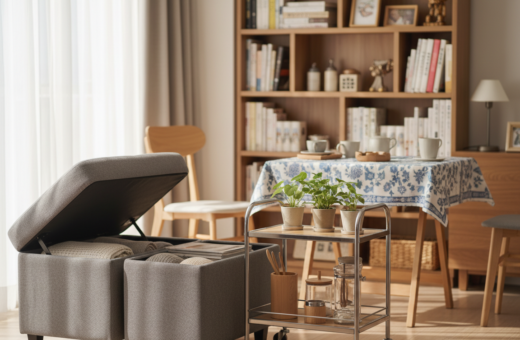
- Pick multi-purpose pieces: ottomans with hidden storage or a sofa that converts to a guest bed add function without bulk.
- Mind the scale: choose pieces that fit the floor area and allow clear walkways.
- Prioritize quality: modern products offer sleek lines and concealed storage that support long-term design goals.
These seating ideas help a studio or living area host guests and stay organized. Thoughtful selections become a vital part of overall design and daily living.
Incorporating Reflective Surfaces to Expand Depth
Mirrors and clear surfaces are powerful tools for making a compact room feel more open. They increase perceived depth by bouncing both daylight and lamp light across a plan.
Strategic Mirror Placement
Blair Moore of Moore House Design often uses a lucite coffee table to add structure without visual weight. A clear table keeps sightlines open while still reading as part of the scheme.
The Hovet mirror from Ikea is a budget-friendly option that visually expands an apartment and amplifies natural light. Placing a large mirror on a feature wall doubles the perceived size of the room and brightens dark corners.
- Use a mirrored table with soft textiles to balance shine and keep the living area cozy.
- Place mirrors opposite windows or light sources to spread light across the space.
- Make mirrors part of a layered plan so reflections reinforce zones and terms designers use to plan depth.
When reflective surfaces are used correctly, they transform a cramped room into a light-filled sanctuary. Professionals rely on these techniques because light is one of the simplest, highest-impact ways to enhance flow and depth.
Choosing Low-Profile Furniture for Airiness
Choosing low-lying seating and pared-back pieces helps a compact living plan read as calm and intentional.
Designers rely on low-profile solutions to keep lines of sight open and the floor visible. Santa Monica-based designer Christine Markatos used saturated blue paint in a living room niche to add depth without adding mass. That color choice made the area feel layered rather than crowded.
Los Angeles designer Francesca Grace selected a sweeping curved sofa for a Samaha Studio project. The rounded form softens the room and keeps movement smooth around the seating area.
- Choose low-back seating to preserve sightlines and enlarge the perceived space.
- Pick one statement piece with curved lines to soften corners and guide circulation.
- Keep floor area visible with slim legs or raised bases to make the room feel lighter.
These terms and ideas form part of a clear design strategy. Prioritizing low-profile pieces is an effective way to keep a studio or living area airy while staying stylish and functional.
Implementing Smart Lighting Schemes
Smart light placement does more than brighten — it defines how the space works. Thoughtful layers of illumination set mood, guide traffic, and free surfaces that would otherwise hold lamps or a side table.
Warm ambient lighting creates a welcoming backdrop. The Noguchi Akari 1A lamp is praised for its soft, natural light that makes an apartment feel calmer and more cohesive.
Warm Ambient Lighting
Start with a glowing central source to wash walls and corners in a warm tone. Large-scale art, as Kate Hartman notes, can pair with low lamps and petite stools to add function without cluttering the floor.
Plug-in Sconces
Plug-in sconces save surface area and add character to a wall without hardwiring. Designer Rebecca Frye Jones favors plug-in models from Schoolhouse and Visual Comfort for task lighting near seating or a bedside table.
- Layer ambient, task, and accent light to make the room read larger.
- Use plug-in sconces to free up table surfaces and define zones.
- Consider these lighting terms as part of any design plan to communicate clearly with a contractor or designer.
For renters or those avoiding rewiring, a guide to practical devices can help — see smart home essentials for renters. Proper lighting is a vital part of making living spaces feel roomy and inviting after dark.
Maximizing Bedroom Utility with Storage Beds
A smart bed can do more than sleep — it can hide clutter and reclaim key floor area. Choosing a storage bed redefines how a bedroom works and creates more room for daily living.
Hilary Gibbs of LIVDEN notes that bold geometric wallpaper can give a room structure and rhythm. That backdrop pairs well with a wall bed or a low-profile storage base to make the area feel intentional.
Resource Furniture offers wall beds that transform a living room or studio from hangout to guest bedroom in seconds. These systems and built-in drawers free floor area that would otherwise hold a bulky dresser or table.
- Save space: storage beds tuck linens and clothes away, keeping the bedroom tidy.
- Boost versatility: a wall bed converts a living area into sleep space when needed.
- Design terms: designers call these dual‑purpose pieces essential when every inch counts.
- Clear floor: freed area can host a desk, seating, or a small sofa for multi-use living.
Investing in a bed with storage is a practical design idea. It keeps the room calm, organized, and ready for daily life.
Enhancing Entryways with Compact Organizers
An efficient entryway acts as a filter, keeping essentials in reach and stray items out of main rooms.
Amy Courtney often adds two-toned ottomans to living zones to introduce texture and hidden storage. These ottomans double as seating and a place to stash shoes or bags near the door.
The Kartell Componibili unit is a popular product for a tight corner. It works as a stackable cabinet that holds daily things like keys, mail, and small tools without crowding the room.
Practical ideas to try:
- Use an over-the-door rack to store coats and bathroom or bedroom linens without drilling walls.
- Place a slim cabinet or stackable pieces in a corner to keep the space tidy and accessible.
- Choose movable items so the entry remains flexible if the layout or bed placement changes.
These organizers are simple terms professionals use to plan flow. They make the entry a functional part of home life and help maintain calm throughout the living spaces.
Using Color to Define and Enlarge Areas
Color can act like an architectural move, carving zones and opening sightlines with a single coat of paint. Designers use paint to make a living room read as distinct areas while keeping the overall space cohesive.
Christina Cruz of Austin favors a bold green limewash from Ritual by Color Atelier to create an intimate, moody feel in a small living room.
By contrast, Anne McDonald recommends Benjamin Moore’s Pristine applied to walls, trim, and ceiling to lengthen and brighten small spaces. Painting ceilings the same color as walls draws the eye upward and unifies the plan.
- Use a monochromatic palette to reduce visual clutter and simplify style.
- Define a studio area with a darker wall or a bold limewash behind a table or sofa to suggest function.
- Match trim and ceiling to lengthen a room and manipulate light for more depth.
“Color is a low-cost, high-impact way to expand perceived square footage and clarify design intent.”
Integrating Wall-Mounted Decor and Shelving
A thoughtfully arranged wall can both store items and act as the main visual anchor in a living space. Designers show that a single bright piece, such as Daniel Rauchwerger’s 1959 scissor chair choice, can lift a neutral room and set the tone for mounted displays.
Wall-mounted shelving makes efficient use of vertical space and keeps the floor open. Mounted shelves display books, plants, and meaningful decor without crowding pathways.
- Balance form and function: mix closed storage with open shelf areas to reduce visual clutter.
- Vary heights: stagger shelves to create depth and guide the eye across the wall.
- Use light: place art opposite windows or near lamps so reflections add perceived depth.
These mounted pieces become an active part of the home plan. Professionals use specific terms to describe how shelving, art, and wall systems work together. When done well, the right arrangement transforms an ordinary wall into a focal point that expands both style and storage in your apartment.
Optimizing Kitchen and Dining Flexibility
A flexible dining strategy turns a tight kitchen into a multi-use hub that supports work, meals, and social time. Choosing a versatile table makes the kitchen and adjacent living room feel intentional and efficient.
Expandable Dining Tables
Expandable tables offer a simple design solution for anyone who needs a surface that adapts. Kate Berry of Domino recommends a streamlined oak table with two leaves to provide dining flexibility in a studio while keeping clear floor circulation.
Resource Furniture sells a model that releases from an upright position and hides integrated storage and USB ports. That product doubles as a desk and keeps cords tidy, so the table becomes part of daily living without crowding the room.
- Flexible seating: pick chairs that tuck under the table to free floor area.
- Multi-use table: a dining table that converts to a desk maximizes utility.
- Smart storage: choose products with hidden compartments for linens and chargers.
Professional designers use these terms to explain how one table can serve as dining, work, and social space. The right table is a practical design idea that keeps the home organized and ready for guests.
Adding Texture and Layers for Visual Interest
Introducing layered textiles and mixed materials makes a room feel intentional without adding mass. Sarah Beth Shamblin of Inside Stories in Denver balances conversation-worthy art and patterns to keep a living room open and inviting.
Layering—plush rugs, soft throws, and varied weaves—creates warmth and depth. Designers mix stone, wood, and fabric to add tactile contrast while preserving floor circulation.
Use different colors, paint treatments, or a textured wall to define zones. A treated ceiling or a statement light can lift a compact space and make the plan read as layered and deliberate.
“Balance pattern and texture so each layer reads as part of the whole, not visual clutter.”
- Mix materials: combine wood, metal, and textiles to create contrast.
- Define zones: rugs or a table anchor a living area without extra storage pieces.
- Extend layers: use towels and tiles in a bathroom to mirror living-area textures for cohesion.
When done well, texture becomes a tool. It turns a plain room into a personalized sanctuary that feels both spacious and richly lived-in.
Curating Personal Art and Gallery Walls
A considered gallery wall can act as architecture, shaping how a living room reads without adding bulk.
Amy Kalikow collaborated with artist Elyse Graham on an abstract mural that echoes a coffee table silhouette. That single piece anchors the wall and gives the room instant personality.
Curating art is a smart way to add decor and style while keeping floor storage minimal. A cohesive gallery ties the bedroom and living areas into one unified design plan.
- Make a focal point: one large mural or grouped frames focuses the eye and frees floor space.
- Use consistent terms: designers advise matching scale, frame color, and spacing to create cohesion.
- Blend function and style: hang shelves for books or small storage to keep surfaces clear.
- Reflect personality: choose pieces that feel personal so the space reads as lived-in and intentional.
When art is curated well, the wall becomes a meaningful part of daily life. The right gallery can transform a plain surface into a calm, stylish focal point for the entire home.
Conclusion
Practical edits and clear priorities let a tight plan breathe and work better. Small changes—like choosing multi‑use pieces and using vertical storage—free floor area and cut visual clutter.
Intentional lighting and color shape mood and depth. They help a home feel larger and more organized without costly renovations.
Each tweak improves daily life. When choices focus on function and flow, the result is a calm, efficient living place that supports routines and style.
The strategies here aim to inspire confident decisions. With a few targeted moves, anyone can transform a compact unit into a beautiful, highly useful sanctuary.