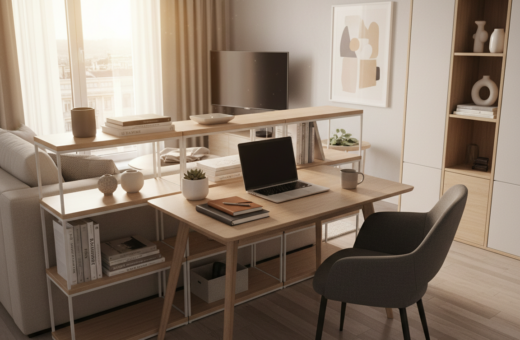
They transformed a tight corner into an efficient workstation by choosing a wall-mounted, foldable solution that saves floor space and feels intentional. The right choice of surface makes it easy to hold a laptop and essential tools while keeping the room uncluttered.
Design decisions focused on multiuse pieces that move or stow away. A compact standing option gives the occupant freedom to shift positions and stay comfortable during long hours of work.
Every piece serves a purpose: it provides a stable surface, stores gear, or tucks out of sight when not in use. That approach turns limited square inches into a stylish, productive area without sacrificing living comfort.
Assessing Your Available Square Footage
A precise sweep of available inches sets the foundation for an efficient work corner. Start by measuring the entire room and note the total living area. Studio units often range from 400 to 600 square feet, so a clear number prevents costly mistakes.
Measuring Your Floor Plan
Measure wall-to-wall and record the width and depth in inches. Translate those numbers into obvious zones for a home office and circulation paths.
Write down the exact space you can devote to a desk and any chair clearance. This helps avoid buying furniture that overwhelms the room.
Identifying Unused Corners
Look for corners that borrow area from two intersecting walls. A corner placement often keeps circulation clear and makes the room feel larger.
- Confirm how many inches of wall you can use before selecting a surface.
- Plan storage so the work surface stays clear of papers and supplies.
- When standing in the room, note underused areas that could host a compact office zone.
“Measure first, buy later — accurate plans save time and money.”
Defining Your Specific Work Requirements
Begin with a clear inventory of the tasks and tools used every workday. This helps determine whether a single laptop will suffice or if multiple monitors, a printer, and other peripherals are needed.
Tailor the workspace to match those needs. For a professional office feel, confirm the surface has room for required equipment and paperwork. If the user spends hours standing, check that height and posture are correct to reduce strain.
Evaluate how much actual space is needed so furniture does not crowd circulation. A dedicated area in the room helps separate home life from work and supports routine focus.
- List daily tasks and required tools.
- Measure the area needed for monitors and documents.
- Prioritize ergonomics for standing periods.
- Organize storage to keep the work surface clear.
“A workspace that reflects actual tasks improves comfort and productivity.”
Selecting the Ideal Portable Desk Setup Small Apartment
Choose a compact work surface that earns its place by serving multiple roles in a studio living area. A piece should perform as a workspace, a spot to jot notes, and fold or move when guests arrive.
For a laptop-only workflow, select a surface between 32 and 40 inches wide. That range gives enough surface for a laptop and a notebook while keeping the room uncluttered.
Look for a unit that assembles in under two minutes with no tools. Quick assembly and tool-free disassembly help renters who move every 12–18 months and homeowners who like to reconfigure living spaces.
- Choose multiuse pieces that earn their footprint.
- Confirm work surface height supports good posture when standing.
- Pick a table that offers storage without dominating the room.
“A desk should be a guest in the room, not the defining feature of your home.”
Maximizing Vertical Space for Storage
Rethinking the walls above your work area unlocks surprising storage potential. This approach keeps the floor clear while giving every tool a place. It is a professional strategy for cramped home offices where every inch counts.
Installing Floating Shelves
Floating shelves mounted above the workspace free the surface for immediate tasks. They store books, binders, and essential supplies without adding bulky furniture to the room.
A monitor riser creates usable storage underneath. Lifting a laptop to eye level improves posture and gives a second shelf on the same footprint.
- Use wall shelves to keep the desk clear of papers and gear.
- Place frequently used items on lower shelves for easy reach when standing.
- Design shelving to fit measured inches above the work surface for balance.
- Pick pieces that integrate with furniture for a cohesive office look.
“Build up, not out—vertical storage makes even compact spaces feel open.”
The Importance of Proper Desk Depth
Proper front-to-back clearance is one of the easiest ways to protect vision and posture during long workdays.
A 24-inch depth is the ergonomic sweet spot. This distance gives the eyes the focal room they need to avoid mid-afternoon strain. It also leaves space for a keyboard and a few essentials without crowding the work area.
If someone is standing while working, the depth should still allow easy interaction with the screen and input devices. Too-shallow surfaces often force users to lean forward, which increases neck and eye fatigue.
- Maintain 24 inches to support healthy viewing distance and posture.
- Consider a monitor arm to free surface area and allow 18–20 inches of depth when needed.
- Measure depth carefully — it is the dimension that most affects daily comfort and long-term health.
“Investing in the correct depth protects your posture and keeps your work space functional.”
For a quick guide on recommended dimensions, see this recommended desk depth. Choosing the right proportions now prevents fatigue later and makes compact designs feel more usable.
Choosing Furniture with Tool-Free Assembly
Interlocking components let anyone build a stable work surface in minutes. This approach makes it easy to reconfigure a room without sweat or special tools.
Tool-free furniture is ideal when changes come quickly. A unit that assembles in under two minutes saves time and reduces hassle. It also packs flat for storage or transport, which is useful for renters and frequent movers.
When people are standing while working, they need confidence in the structure. High-quality joints and snug fittings keep the surface solid despite quick assembly.
- Choose pieces with interlocking joints that lock securely without tools.
- Pick models that disassemble fast so you can clear the space for guests.
- Prefer furniture rated for daily use and repeated assembly cycles.
- Look for units that store flat and travel easily when needed.
“A quick-assemble work unit removes friction from reconfiguring your living area.”
Utilizing Wall-Mounted Foldable Solutions
Wall-mounted foldaway solutions convert blank wall space into an elegant working area with minimal effort. They look like cabinets or decorative panels when closed and free valuable floor inches when not in use.
Benefits of Murphy Desks
Murphy desks offer a stylish, fold-down solution that keeps a room clutter-free after work hours. When open, the surface provides a sturdy workstation for a laptop and papers.
Designers often pick these pieces for a studio or a small home because they make the room feel larger. A Murphy unit blends with decor and keeps the living area looking intentional.
Installing Retractable Shelves
Retractable shelves give flexible storage without adding bulk. They slide out to hold supplies and tuck away when not needed, creating a clean workspace.
- Reclaim floor space: wall solutions maximize every inch in a room or studio apartment.
- Stable surface: many units support standing work and daily use with robust hardware.
- Versatile furniture: foldable tables and shelves adapt to different tasks and looks.
“A fold-down wall unit keeps a home office from dominating the room and makes efficient use of vertical space.”
Incorporating Mobile Rolling Desk Carts
A rolling workstation lets someone move their work to light-filled corners or quiet rooms with ease.
Mobile rolling carts bring flexibility to a home office by creating a movable workspace that adjusts to daily routines.
A compact desk on wheels can include adjustable height, so a user can switch between sitting and standing quickly.
Professionals often pair a rolling unit with an ergonomic chair to keep posture steady while using a laptop or full monitor setup.
- Move the workstation to follow natural light or reduce glare on the surface.
- Use the unit as a table for notes, meetings, or creative tasks when the workday ends.
- Tuck the cart into a closet or corner to free space when not in use.
“A high-quality rolling unit turns confined rooms into flexible zones that support focus and mobility.”
Leveraging Under-the-Staircase Nooks
Unused space beneath a staircase offers a clever spot for a focused work area. Many homes with open stairs hide a shallow recess that can be reclaimed without altering circulation in the room.
Choose between a compact built-in unit or a freestanding piece to suit the home’s style and budget. Built-ins maximize every inch and feel integrated. Freestanding units let the owner reconfigure the space later.
Implementing Convertible Desk-to-Dining Tables
Convertible surfaces work well in under-stairs nooks. A fold-down table or a slim convertible top can serve as a workspace by day and a dining or prep surface by night.
- Leverage the adjacent wall for vertical storage and shelves to keep the workspace tidy.
- Design the area for standing use where clearance allows, improving posture and saving floor space.
- Consider custom sizing to fit exact inches under the stairs for a polished result.
“Turning an under-stair corner into a functional workspace is a smart way to add value and utility to a home.”
Implementing Convertible Desk-to-Dining Tables
A convertible table turns a single footprint into both a functional workspace and a social dining area. This approach is ideal for a studio living where every inch of space must earn its keep.
Well-designed models use smooth mechanisms that shift the surface from work mode to meal mode in seconds. Many offer adjustable height and locking hardware so the surface feels stable whether someone is seated or standing.
Design professionals recommend these twin-purpose pieces when a room must serve multiple roles. A quality compact desk solution replaces two separate desks and frees floor area.
- Dual use: transitions from day work to evening dining with minimal effort.
- Sturdy build: supports standing use and everyday wear.
- Smart design: lets living spaces stay tidy and flexible.
“A convertible table is a smart long-term investment for anyone who wants utility without clutter.”
Optimizing Corner Spaces with Compact Desks
A tucked-in triangular unit can turn an overlooked corner into a focused workspace. This approach uses the right angle of a room to create a usable surface without stealing circulation space.
Choosing triangular designs lets the piece fit snugly against two walls and frees floor area for movement. Many models include cord-organizing openings and shelves beneath the surface for neat storage.
Design Advantages and Practical Tips
Corner solutions work well for a home office because they balance surface area and compact form. When standing, a user can reach a laptop and essentials stored on lower shelves with ease.
- Maximizes unused corner space while keeping the room open.
- Built-in cable holes reduce surface clutter and improve safety.
- Shelves beneath the table create reachable storage for files and accessories.
- Professional designers favor these ideas for efficient, attractive workstations.
“A well-placed corner unit makes the most of limited inches and keeps the workspace tidy.”
Enhancing Ergonomics with Adjustable Height Pieces
A compact adjustable-height piece helps users move from seated work to standing work in seconds.
Switching positions improves comfort and reduces fatigue over long hours. A quality standing desk lets someone find the right height so their elbows form a 90-degree angle when typing. That simple alignment protects wrists and shoulders.
Ergonomic experts recommend alternating between sitting standing throughout the day. This approach prevents the strain that comes from a single static posture and supports longer sustained focus in the workspace.
Many compact desk solutions are built for tight space, so a professional setup can fit into living areas without overwhelming them. High-quality furniture with smooth height controls is a smart long-term investment for health and productivity.
- Enhances comfort during long hours at work.
- Allows quick shifts between sitting standing for better posture.
- Ensures the keyboard surface supports a 90-degree elbow angle.
- Recommended by professionals to reduce physical strain.
“Investing in an adjustable height desk is a practical step toward a more comfortable, productive home office.”
For those seeking compact standing solutions, consider the practical guide to a standing desk for small spaces to compare models and features.
Selecting Materials That Match Your Decor
Picking materials that echo a room’s palette instantly makes a workspace feel intentional.
Material choice affects durability and visual cohesion. Choosing strong, stable components prevents warping and keeps the area looking finished over time.
For a long-lasting surface, 13-ply Baltic birch plywood is a clear professional pick. It resists warping and delamination in humid conditions common in many homes.
Unfinished wood offers flexibility for renters. It can be painted or stained to match landlord requirements and the existing wall color, making the piece feel built-in.
- Match design: select materials that integrate with your home finishes for a cohesive look.
- Durability: 13-ply Baltic birch holds up to daily use and will not sag over time.
- Customization: unfinished surfaces allow paint or stain to personalize the piece.
- Comfort: when standing at the surface, quality materials improve both feel and appearance.
“Investing in premium materials makes the work area feel like a natural part of the home.”
Managing Chair Clearance and Floor Space
Leaving sufficient clearance for a chair changes how comfortable and usable a workspace feels. Designers treat clearance as a basic requirement to keep circulation smooth and the room functional.
Allow at least 18 to 24 inches of open area behind the desk so a chair fits and tucks in neatly. For freedom to push back and stand, plan for 36 inches of clearance.
Placing the desk against a wall preserves circulation and keeps furniture from interrupting flow. Corner placement often borrows two walls and helps the room feel more open while saving central floor space.
- Professional layouts account for chair clearance to protect posture and comfort.
- Consider overall floor measurements when choosing desks and other pieces of furniture.
- Plan for height and clearance when designing a standing-friendly area for standing work.
“Measure for movement: a clear floor lets work feel natural rather than cramped.”
Maintaining a Clutter-Free Work Environment
A tidy work surface transforms a multiuse room into a productive workspace in minutes. When a table doubles as a vanity or dining area, keeping clutter controlled matters more than ever.
A slide-out shelf is a smart space-saving solution that hides a laptop and paperwork when not in use. It preserves the look of the living room while leaving enough surface for other tasks.
When someone is standing at a standing desk, a clear surface helps them focus. Professional organizers recommend hidden storage, labeled bins, and cable management to keep supplies out of sight at day’s end.
Clearing the workstation each evening prepares the room for living and makes mornings easier. This habit works well in a studio or a small home where every inch must earn its keep.
- Keep only current work on the work surface; tuck away extras.
- Use a slide-out shelf for laptop storage and quick access.
- Choose furniture with cable management so the space looks like a professional office.
- Clear the surface nightly to protect focus and living comfort.
“A clean surface is a clear mind.”
Conclusion
A thoughtful plan turns limited square inches into a dependable work area that supports daily routines. By prioritizing vertical storage and measuring the room, anyone can claim useful space without overcrowding the living area.
Choose a flexible desk that fits the floor plan and adapts across tasks. Select pieces that lock solidly in place and hide clutter when the day ends.
Keep the surface clear, use labeled bins and cable management, and treat the workstation as a living part of the home. With those steps, even a modest corner can become a professional, inspiring place to work.