Many professionals who are working home face one clear problem: living and work areas overlap. That mix makes it hard to switch gears for a day of tasks.
They found that a brief, deliberate reorganization created a distinct office zone. This change helped them reclaim time and mental clarity.
Research links physical layout to cognitive performance. A neat space reduces distractions and helps people enter a productive state more often.
Setting simple boundaries — like a dedicated desk, clear storage, and scheduled breaks — turned the home into a place for both rest and achievement. Over weeks, this shifted daily habits and raised output.
For professionals in the United States, modest changes to an apartment layout yield real gains. They spend less time toggling tasks and more time on meaningful work.
Identifying the Ideal Work Zone
Choosing where to work at home starts with spotting the quietest, brightest corner of your room. A clear assessment makes it easier to claim a reliable office spot without major renovation.
Natural Light Considerations
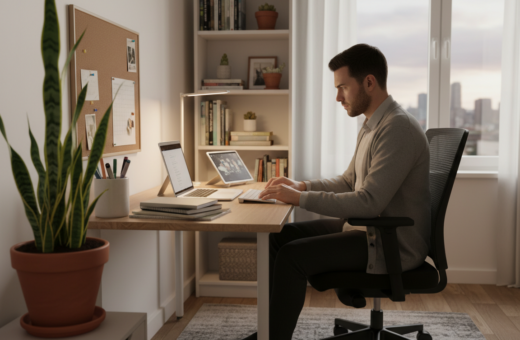
Place a desk near window access whenever possible. Natural light lifts mood and cuts the need for harsh artificial lighting during daytime hours.
Even a south-facing sill or a narrow window can provide enough light to improve comfort and alertness while working.
Evaluating Unused Nooks
Look for an unused corner in the living room or a shallow closet that can be refitted. Treating that corner as a primary office creates a psychological anchor for daily tasks.
Choose compact furniture that fits the room layout and leaves circulation paths clear. Proper lighting and a dedicated spot make the converted nook feel intentional, not temporary.
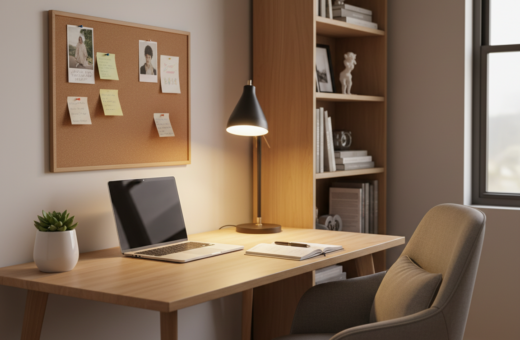
- Tip: A small table and a lamp are often all that is needed to claim a functional office area.
- Tip: Keep the desk near window light to reduce evening glare and maintain a steady mood through the day.
Strategies to Improve Focus in Small Apartment Workspace
A reliable daily routine transforms scattered hours at home into predictable, productive stretches.
Set clear work hours. Urbanica recommends defined hours to help separate professional tasks from leisure. Consistency trains the mind to enter work mode at the same time each day.
Designate a single spot for the home office and keep that area for work only. Even a narrow desk with a lamp signals the brain that this space is for tasks, not relaxation.
Keep the desk clear of non-essential items. A tidy surface reduces interruptions and speeds transitions between tasks during busy hours.
- Block specific hours on the calendar to protect uninterrupted time.
- Use short, timed sessions to maintain steady focus throughout the day.
- End each session with a brief shutdown routine to mark the close of work.
“Setting clear work hours is a vital strategy for anyone trying to maintain productivity in a small apartment.”
Selecting Ergonomic Furniture for Limited Areas
Smart furniture choices let professionals set up a polished office without a remodel. This section covers compact seating, multi-use desks, and support features that fit a tight room.
Choosing Compact Chairs
Compact chairs that tuck under a desk save valuable space and keep the corner tidy. Look for models with lumbar support and a slim profile.
Multi-Functional Desk Solutions
The Office Table Nebraska is a solid pick for a clutter-free desk surface with built-in drawers for supplies. A desk that doubles as a dining table or console adds value to a small room.
Prioritizing Support
Ergonomic chairs are essential for long hours of work. Proper support prevents pain and helps sustain a steady routine.
- Select a desk with drawers to manage office supplies and keep the surface clean.
- Use wall-mounted shelves or a closet conversion to boost storage without losing style.
- Choose multi-functional furniture that fits the design and the things people use daily.
“When things are organized, a modest home office feels intentional and professional.”
For more guidance on choosing ergonomic furniture for limited space, read ergonomic furniture for small spaces.
Maximizing Vertical Storage Potential
Stacked drawers and wall racks free the desk and calm the mind. These choices open floor area while keeping essentials at hand.
Use the wall for floating shelves or a pegboard to hold supplies, tools, and reference items. That keeps the desk surface clear and makes daily transitions faster.
- Vertical bins or narrow drawers store papers and chargers so everything needed for the day is reachable.
- A well-organized closet can hide extra gear and preserve a tidy home office feel.
- Choose furniture with built-in vertical compartments to manage things without taking more floor space.
Smart design reduces clutter, which lowers stress and supports a steady routine. For readers who want a step-by-step approach, see the vertical storage guide.
“Good vertical storage converts unused wall height into practical, calming order.”
Lighting Techniques for Visual Comfort
Good lighting lets a person work longer without strain and keeps a room comfortable all day. Simple choices make a big difference for a desk and the surrounding area.
Layering Ambient and Task Lighting
Layer light sources by combining a central fixture with a desk lamp. Ambient lighting sets an even glow across the space. A targeted lamp provides bright, focused light for detailed tasks.
Placement matters: position the desk near a window to use natural light during the day. That way the eye gets softer, more natural exposure and mood often lifts.
- Use a warm ambient fixture and a cool-toned desk lamp for contrast without glare.
- Choose a desk lamp with adjustable arm and dimming to control brightness for different tasks.
- Balance sources so shadows fall away from the work area and do not produce harsh lines.
“Choosing the right desk lamp is critical for modern office design and visual comfort.”
Outcome: Thoughtful lighting design creates a professional home area. It reduces eye strain and helps a person stay productive from the start of the day.
Creating Visual Boundaries Without Walls
A clear visual edge lets a corner become a proper office without knocking down a wall.
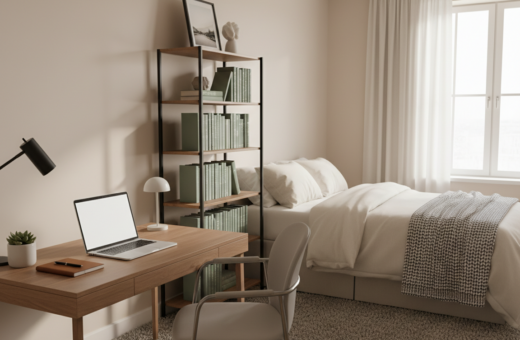
Place a folding screen or a tall bookshelf to mark a separate space. These items act as instant dividers. They give the room a subtle, intentional boundary.
Set a rug under the desk to define the floor area. A rug makes the desk feel like its own place. It helps the brain notice a change from living to work.
Strategic furniture placement can carve a workable corner without permanent build-out. A shelf, a screen, and a rug form a simple layout that suits a home office or a shared living area.
- Use tall shelves as a visual wall that holds gear and books.
- Choose a low-profile rug to anchor the desk and chair.
- Keep clear sightlines so the divider reads as design, not clutter.
“A well-designed boundary signals to the brain that this is a professional space and time for focused tasks.”
Managing Tech Clutter and Cables
Tangled cords and scattered chargers can turn a tidy desk into a daily headache.
Start by grouping cables with sleeves or clips to keep the surface neat during long hours. A simple sleeve hides multiple cords and makes the area look professional.
Store the laptop and extra chargers in a closet or drawer at the end of the day. Putting devices away helps people disconnect from work and reclaim their home.
Keep cords untangled so the small space remains functional and calm. Label chargers and use a single power strip to reduce search time and lost minutes.
Quick tips:
- Use cable clips to route cords along the desk edge.
- Assign a drawer or storage box for spare chargers and tech things.
- Spend ten minutes at the end of the day to coil cables and stow gear.
Outcome: By dedicating a little time to cable management, they create a clean office setup that saves time and supports a better work-life balance during busy hours.
“Good cable habits make the desk look sharp and cut daily friction.”
Establishing Productive Daily Rituals
A short end-of-day ritual can signal the brain that work is done and personal time begins. Small actions create a repeatable rhythm that protects time and reduces clutter.
The Importance of a Shutdown Routine
He or she should clear the desk surface, close open tabs on the screen, and tuck the chair beneath the table. This brief routine makes the room feel finished and ready for rest.
Tip: Store the laptop and essentials in a closet or storage bin so the next morning starts with a clean slate. A single motion to stow things saves minutes and lowers friction.
Maintaining a Clean Surface
Keep one tidy spot for current projects. A dedicated area with proper lighting and neat storage protects the home office style and supports steady work hours.
- Wipe the surface each day to reduce dust and screen glare for better eye comfort.
- Use a desk lamp as a signal: switch it off to mark the end of the day and switch it on to begin.
- Arrange chairs and furniture so the room reads as intentional, not cluttered.
“A consistent shutdown routine helps the mind move from task mode to personal time.”
Conclusion
They found that thoughtful design and steady routines let a person treat their home as both a calm refuge and a reliable work place.
Choosing the right furniture and a supportive chair, then optimizing lighting and task light, makes long hours easier to handle.
Consistency each day keeps things orderly. A neat desk, proper storage, and clear habits help protect personal time and sustain work energy.
Let personal style show through. When the setup feels like their own, people are more likely to use it and stay balanced while working at home.
Outcome: With a few smart choices, a small apartment can become a professional, livable home that supports steady, productive days.