Research shows that visible disorder is the best predictor of procrastination in a home office. When someone lacks a clear system for supplies and documents, the surface fills fast. Small spaces force items into piles and drawers without dividers.
Many people discover that one week of work leaves their desk a mess of papers, cords, and a stray mouse or laptop charger. A tiny drawer becomes stressful when it holds everything without labels or clips.
Keeping a functional workspace needs rules, not wishful thinking. Simple organizers and smart storage give each thing a place. Over time, that system reduces cleanup and helps someone stay focused during the work day.
Why Compact Workspaces Quickly Become Chaotic
Tight spaces magnify small habits until the whole area feels unmanageable. Limited surface area cannot hold the steady inflow of papers, devices, and personal items that arrive each day.
Without a clear system for where tools belong, the average desk turns into a dumping ground. Papers pile up, chargers get tangled, and simple tasks take longer.
Research from Home + Sort shows that visible disorder reduces focus. In a small workspace, that effect becomes stronger because one stray item takes up more of the usable surface.
- When there is no dedicated spot for each item, the mess grows faster than it can be managed.
- Even a small amount of clutter makes the limited space feel overwhelmed.
- Maintaining order requires a repeatable routine and intentional storage choices.
For practical ideas on creating a repeatable routine and better storage, see this home office organization guide.
Essential Desk Clutter Prevention Tips for Daily Maintenance
A five-minute ritual each evening can stop small messes from growing into a full-blown distraction. Experts say a brief tidy makes the next work day simpler and saves time hunting for papers or supplies.
The Power of Daily Tidying
They recommend a short end-of-day sweep: clear stray paper, return tools to their place, and wipe the surface. This habit prevents piles from forming and keeps the workspace ready for the morning.
Establishing a Minimalist Mindset
Adopt a rule of keeping only the things used that day on the surface. A well-designed system for papers and a few smart organizers give each item a home. Even a small drawer stays neat with a simple insert for pens and clips.
“Consistency beats perfection; tidy daily and the room stays functional.”
- Make it routine: five minutes at day end.
- Limit items: remove extras that do not serve work.
- Use organizers: assign a place for every small supply.
Mastering Cable Management and Electronics
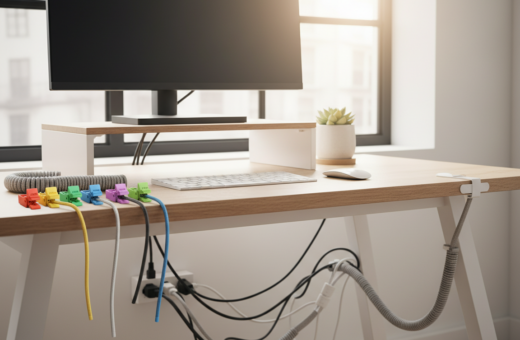
A tangled web of power cords and chargers can quietly steal minutes from every work session. Good cable habits return that lost time and make the workspace feel larger. Simple mounts and a central charging hub transform electronics from a mess into a system.
Mounting Power Strips
Mount a power strip under the desk or on the wall to keep outlets off the surface. Jeff used a wall mount power strip with four outlets and four USB ports to free his top space.
This one change keeps laptop chargers and phone plugs out of sight while still easy to reach.
Using Adhesive Cable Holders
Adhesive holders stop cords from slipping behind the desks and keep them within arm reach. Command cord clips run cords along the inside edge so plugs stay behind but out of sight.
Velcro cable labels are essential for identifying each cord without tracing it all the way back. That saves time when someone needs to unplug one device.
Implementing Charging Stations
A dedicated charging station can power an Apple Watch, an iPad, and three phones at once. A single hub prevents tangled wires on the desk surface and reduces visual clutter in the home office.
- Mount strips or hide them under a drawer to clear the top.
- Use clear clips to anchor cords along the back for a clean look.
- Label cords with Velcro tags so each plug is easy to find.
“Proper cable management is one of the most important steps in creating a professional setup that supports the work day.”
Optimizing Drawer Storage and Vertical Space
Smart use of drawers and vertical racks turns small storage into a dependable system. Clear organizers and a few securing tricks keep things from shifting and save time looking for items.
Poppin organizers work well to divide a drawer so pens, clips, and other supplies each have a place. Added inserts prevent piles and make the surface easier to keep clear.
Using Dividers and Securing Inserts
Clear cord clips can be stuck to the bottom of a drawer to hold dividers steady. Removable museum gel is another option when organizers slide around.
- Keep essentials visible: label inserts so anyone can return items to the right spot.
- Free surface area: organized drawers create more storage for a mouse or laptop accessories.
- Go vertical: upright trays and wall-mounted racks keep items off the desk and within sight.
A clean drawer reflects a well-managed workspace and short regular clears reduce lost time. Position a lamp so it lights work without taking valuable space. A desk mat protects the surface and gives a smooth area for writing or using a mouse.
Strategies for Taming Paper and Document Overload
Unchecked mail and loose forms can turn a small workspace into a daily distraction. A short, repeatable plan helps reclaim space and focus quickly.
Start with three piles: act on, discard, and keep. This simple sort removes immediate mess and exposes what truly needs a filing system.
Practical ways to digitize and store
A handheld scanner is one of the most efficient tools to digitize tax forms, receipts, and legal documents. After scanning, save files in shared Google Drive folders so the home office team can access records without paper.
- Use a mail organizer to sort incoming envelopes each day.
- Keep a labeled tray or small sorter near a drawer for in-progress documents.
- Back up digital files—services like Backblaze protect work in case a laptop fails.
“Consistent scanning and one tidy session at day’s end make paperwork manageable.”
Design a quick system that combines a scanner, shared cloud folders, and a daily mail check. Over time, this reduces paper and saves time searching for important documents.
For broader methods to clear and sustain an organized office, see boost productivity by clearing out office.
Creating a Productive and Ergonomic Environment
Small adjustments to furniture and light can change how a person performs throughout the day. A thoughtful layout blends posture support with easy access to tools and paper systems. This reduces fatigue and saves time on small tasks.
The Role of Proper Lighting
Good illumination cuts eye strain and keeps focus steady during long work sessions. A marble and brass lamp provides warm, even light and a professional look. Position the lamp so shadows do not fall on documents or the mouse area.
Personalizing Your Desk Aesthetic
Personal touches make a home office feel inviting. Add a small plant, a framed photo, or an Ember smart coffee mug for comfort that lasts through a morning task.
A desk pad protects the surface and creates a smooth space for a mouse and keyboard. Keep most-used office supplies within arm’s reach and place documents in a labeled drawer or tray.
“Combine function and style to build a workspace that supports steady work and well-being.”
- Ergonomic chair and screen at eye level support posture.
- Charging station keeps cords off the top and organized.
- Use a notebook or task list to manage daily goals and papers.
Conclusion: Sustaining Your Organized Workspace
Conclusion: Sustaining Your Organized Workspace
Small, regular actions keep a workspace ready for focused work. They are easier to keep than a large, infrequent overhaul.
Maintaining an organized desk is a continuous process that relies on simple evening habits. By applying the strategies above, someone can turn a chaotic area into a calm, productive zone.
If the desk grows messy during a busy week, a short reset session restores order fast. Consistency is the key: tidy at day end and the results compound over time.
Outcome: less visual clutter, better focus, and more enjoyable time spent working.