Keeping a tidy home matters. A tangle of cords on the floor turns a small room into visual clutter and a tripping hazard.
They can reclaim floor area by using smart cable routing and clever hides. Simple fixes include tucking devices behind furniture or using storage boxes designed to hold power strips.
Finding the right solution keeps outlets accessible and protects devices from accidental damage. Readers can learn practical methods to route cords along baseboards, mount a strip under a table, or conceal wiring with covers.
For step-by-step ideas on how to hide cords and outlets, see this guide to hide cords and outlets that fits many homes: hide cords and outlets.
Assessing Your Space and Power Needs
Measure the layout and mark which electronics need constant access before buying storage. Start by recording outlet locations and noting which devices must stay plugged in daily. This makes it easier to plan routes and avoid clutter.
Measure the exact dimensions of your power strips and compare them with potential storage areas. Duckworth recommends checking surge-protector size before selecting boxes or mounts.
Next, evaluate total wattage. Experts advise adding the wattage of each device to prevent overloading circuits. Safety matters most when several items share one outlet.
- Place strips near existing outlets to shorten runs.
- Decide which devices can be tucked away and which need quick access.
- Create a simple room layout to test placement in different areas.
Following these practical tips helps avoid overcrowded outlets and keeps cords functional and out of sight.
Effective Power Strip Organization for Small Spaces
A tidy desk starts with moving bulky surge units off the floor and into ventilated containers. Using a purpose-built cable management box keeps cords neat and makes hiding power strips simple.
Cable management boxes offer a neat home for strips and extra cables. Choose a model large enough to fit the specific power strip and spare cords. Many people like imitation rattan baskets because they look natural and allow air flow, which helps reduce overheating.
Make sure the box has openings for plugs and ventilation. New sets often come in two sizes, making them easy to match to a kitchen, dining area, or desk nook.
Implementing Under-Desk Trays
Under-desk trays lift strips off the floor and clear clutter beneath work surfaces. Trays can be mounted to a wall, tucked into a drawer, or attached under furniture to keep cables accessible but out of sight.
- Store extra charging devices or phone cords inside a box to keep them ready.
- Mount a management box under the desk to protect wires and free floor areas.
- Use breathable baskets when ventilation matters to avoid overheating risks.
For visual ideas and mounting tips, see this curated set of examples on power‑strip ideas.
Selecting the Right Cable Management Tools
Choose cable tools that match device needs and room layout to keep cords tidy and accessible.
Start with reputable products. Look at brands like Bluelounge, The Container Store, and Yamazaki to get durable items that last.
Evaluating Materials and Sizes
Pick a cable management box with ventilation slits to help prevent overheating of surge units and cables. Ventilation keeps heat low and supports safety.
Check materials: minimalist plastic boxes fit under a desk while woven designs add style in living areas. Choose a box with openings on both sides so cords run in and out with easy access.
- Measure the management box and compare it to the surge protector and plug heads.
- Use cable clips along the wall or desk to guide cords into neat lines.
- Favor products that offer clear access to plugs so daily use stays simple.
Simple choices—the right size, good ventilation, and solid materials—make cable management tools work well and look intentional.
Installation Techniques for Off-the-Floor Storage
Simple attachments under furniture turn chaotic cords into a neat, hidden system. These methods keep strips elevated and improve daily access while reducing floor clutter.
Using Adhesive Clips for Cord Routing
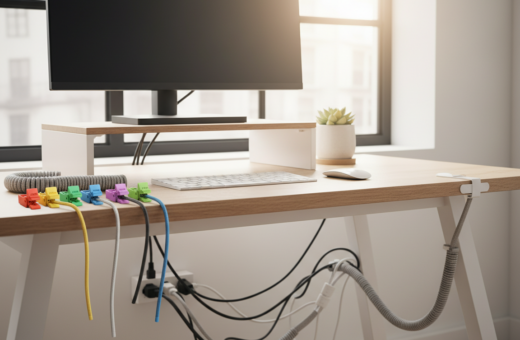
Adhesive clips let users route cable runs along the underside of a desk. Attach clips every few inches to guide cables and wires along a clean path.
Tip: Choose clips rated for the cable load and surface type to protect adhesives and maintain safety.
Applying Velcro Straps for Length Control
Velcro straps tame extra cable length and prevent tangles in drawers or behind furniture. Wrap straps loosely so plugs stay easy to remove.
They work well with charging cords and extension strips, keeping cables bundled without stress on connectors.
Securing Baskets to Furniture
Mount a ventilated basket under a desk or inside a drawer to hide a power strip and devices. Use heavy-duty screws or mounting tools to secure the organizer.
- Keep access clear so the strip can be unplugged quickly if needed.
- Route wires through clips into the basket to cut clutter in high-traffic areas.
Prioritizing Safety and Ventilation
Good airflow and easy access are the two non-negotiables when hiding cords. Enclosing a power strip in a tight box without ventilation can cause dangerous overheating.
Duckworth notes that ventilation slits in a cable management box help prevent overheating of power strips and charging devices. Choose a box with openings that allow steady air flow and avoid fully sealed containers.
Always use surge protectors rated to match the electrical draw of your equipment. This reduces risk to the home and connected devices.
- Keep quick access to the main switch and plugs so the strip can be cut off in an emergency.
- Inspect cables and wires regularly for frays, exposed conductors, or heat damage.
- Store strips in a ventilated box to protect devices from heat while keeping cords off the floor.
Routine checks and sensible placement make hiding cords safe and effective. Simple habits keep equipment cooler, more reliable, and easier to reach when needed.
Aesthetic Considerations for Modern Interiors
Thoughtful finishes and matching textures make cable solutions feel like part of the decor rather than an afterthought.
Choose materials that echo existing furniture. Wood tones, matte plastic, or painted metal can help cables and cords blend into the room.
Minimalist cable management ideas hide wires behind a wall or inside sleek boxes. This keeps sightlines clear and the space calmer.
- Use decorative clips to route a cord along a baseboard so clips become a visual detail.
- Pick organizers that match trim and finishes to make the solution feel deliberate.
- Coordinate color and texture so cables and the organizer read as part of the decor.
A good aesthetic values both form and function. When management looks intentional, the whole room feels more peaceful and inviting.
Conclusion
Simple routing choices can turn a cluttered corner into a tidy, usable area. Using a clear plan and basic safety habits makes this a reliable solution.
Readers will find that the right box and a few smart organizers protect devices while keeping cords out of sight. A good organizer or set of boxes also simplifies maintenance.
These tips and practical ideas give an easy way to refresh any home. When they combine clips, boxes, and a short upkeep routine, spaces stay safer and neater every day.