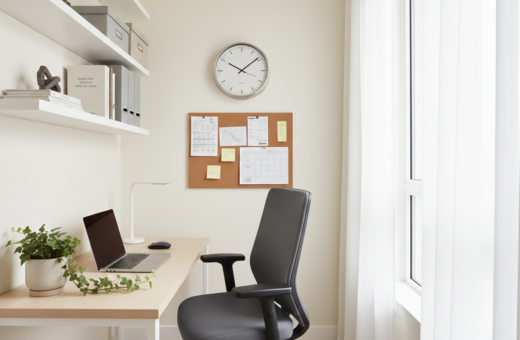
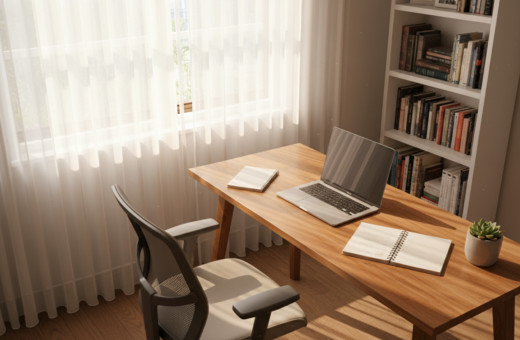
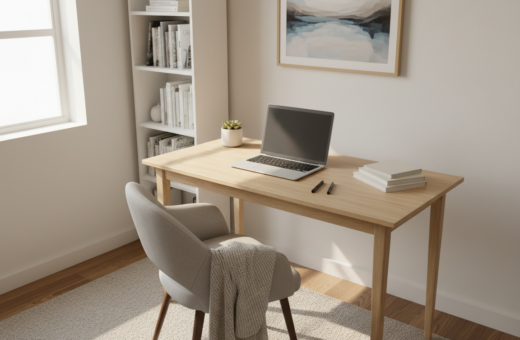
The tests showed that selecting the right desk makes a big difference in a single-room apartment. He found that a 28.5″H x 36″W x 24″D Branch Daily Desk uses a modular system to save floor space and add flexibility.
The West Elm Parker Mini Desk, with its 36″W x 20″D footprint, proved ideal for tight layouts. It fit a laptop and essentials without cutting into living spaces.
Testing revealed simple habits that improve daily use. Measure the area, choose a desk that fits the wall, and keep surfaces clear. A well-chosen desk turns a cramped corner into a focused work spot.
The right small desk or compact desk keeps the room open and stylish. With careful planning, small spaces can support both comfort and productivity without compromising the apartment’s flow.
The Reality of Working in a Studio Apartment
A single-room layout turns every piece of furniture into a deliberate decision that affects daily focus. The Branch Daily Desk, built from laminated MDF and powder-coated steel, offers a durable solution that fits a small space and supports a home office. A sturdy desk helps create a clear, professional zone even in limited quarters.
Working in one room demands disciplined selection of desks and multifunctional pieces. A small desk that fits a living room or bedroom can boost productivity and keep work from overflowing into leisure areas.
- Choose dual-purpose furniture so each item saves floor area and increases flexibility.
- Keep the workspace organized to prevent clutter from taking over the office space during busy weeks.
- Use the desk consistently to signal the brain that it is time to focus.
When set up thoughtfully, a compact desk and a well-marked area make the room feel larger and more functional. Proper planning turns a small apartment into an efficient work environment.
Essential Compact Workstation Ideas for Studio Apartments
Choosing a streamlined table creates a clear zone that supports daily laptop work and keeps the room calm. A small setup should balance function and visual simplicity so the home feels open and usable.
Laptop-friendly setups
A simple laptop arrangement often needs only a small desk. This frees walking paths and keeps the room flexible during the day.
The West Elm Parker Mini Desk, with its beechwood frame and walnut veneer, demonstrates how a refined piece can act as a centerpiece without dominating the apartment.
Minimalist design principles
Minimalist design favors surfaces that stay clear and lines that stay simple. That approach helps focus when they work from home and reduces visual stress.
- Pick a desk that matches your room’s aesthetic.
- Keep the table surface tidy to improve concentration.
- Choose one versatile piece that complements other desks or storage in the space.
Maximizing Vertical Space with Wall-Mounted Desks
Mounting a desk on the wall transforms empty vertical real estate into a practical work zone. This approach saves floor area and keeps the room feeling open. It is ideal in a small space or apartment where every inch counts.
Wall-mounted desks eliminate bulky legs and create a clean, minimalist design. Pieces like the Corbel Desk by Kroyer-Saetter-Lassen for Audo pair steel frames with oak veneer to be both sturdy and stylish. They support a laptop and daily work tools while leaving the floor free for seating or storage.
Floating shelf installation
Floating shelf methods let the table sit at any height. That makes a custom workspace that fits the user and the room. Proper anchors ensure the shelf is safe and can hold necessary equipment.
- Save floor area: No legs means more clear space for chairs and bins.
- Flexible height: Install the shelf to suit sitting or standing use.
- Vertical storage: Add shelves above the desk to keep the office tidy.
- Strong support: Use proper brackets and wall anchors for stability.
- Good design: A wall-mounted piece can be both a workspace and a focal point.
Utilizing Corner Nooks for Productivity
A corner nook can become a focused workspace with a minimal footprint. A well-chosen desk turns unused area into a practical home office without crowding the room.
The Tangkula Corner Desk is 33.5 inches wide and uses a triangular design to fit neatly into a corner. This table offers a stable surface with simple legs and often includes built-in shelves to keep supplies off the floor.
Using a corner helps keep the rest of the apartment open and makes the space feel larger. Many corner desks add cable management, which keeps the workspace tidy and reduces distractions during work.
- Maximize area: Turn a neglected corner into a dedicated office.
- Save floor space: Shelves and vertical storage reduce clutter.
- Stay focused: A laptop on a corner desk creates a compact, private zone.
With the right piece of furniture, a corner can become an efficient small desk spot that blends with the room’s decor and supports daily work routines.
The Versatility of Ladder-Style Furniture
A ladder-style desk turns a narrow strip of wall into a tidy, vertical workspace with built-in storage. The Design Within Reach Folk Ladder Desk, with solid wood rails in ash or walnut, shows how a single piece can do both jobs.
These desks lean against the wall, so they are easy to move and reconfigure when someone rearranges a living room or home office. The slim table surface holds a laptop and daily tools while the shelves keep supplies nearby.
Vertical shelves multiply storage without crowding the floor. Many ladder desks include multiple shelf levels that store books, bins, and decor above the work area.
- Save floor space: A ladder piece combines a desk and shelving in one unit.
- Stylish and functional: The Folk Ladder Desk adds modern design while offering a stable work surface.
- Easy setup: Leaning legs simplify installation and make the desk simple to reposition.
By integrating storage and a work surface, ladder-style furniture helps keep an apartment organized and ready for daily professional use.
Integrating Workspaces into Existing Shelving
Turning a bookshelf into a working surface creates a seamless blend between storage and workspace. This approach lets the room keep a tidy look while adding function to a single wall.
Bookshelf combinations
Using a shelf bay as the base for a desk saves floor space and keeps work materials close at hand. The Blu Dot Stash Reversible Desk (42″W x 24″D) fits neatly into many bookcases and includes a storage drawer that flips sides for left- or right-handed users.
The Article Fantol Cabinet Desk (42″W x 24″D) pairs a solid wood frame with removable shelves. Both pieces make the table feel like part of the shelving, so the living room looks like a unified design piece.
Hidden pull-out drawers
Hidden drawers and slide-away surfaces keep a workspace tidy. A pull-out shelf can hold a laptop or keyboard and then disappear when not in use. This is one simple way to add extra storage while preserving room flow.
- Save space: Bookcase bases keep supplies organized on the same wall.
- Custom fit: Adjustable shelves allow the desk height to match chairs and users.
- Neat design: Integrated drawers hide clutter and make the area look like a single furniture unit.
Benefits of Foldable and Retractable Solutions
Retractable tables let a room return to living space without losing a reliable surface to work on.
The Wohomo Folding Desk folds to a slim 2.76″ profile and fits tight storage. The GreenForest Folding Desk is fully assembled and ready as a portable workspace.
These pieces reclaim floor area after the day. A foldaway desk or a retractable wall shelf frees square footage and keeps the home tidy.
- Save space: Foldable and retractable desks tuck away when not in use.
- Quick setup: Preassembled desks offer instant use with minimal fuss.
- Minimal design: Slim profiles and simple shelving blend into any room.
- Laptop-ready: A fold-down table gives a dedicated laptop surface without a permanent office.
- Flexible living: These desks let someone shift an apartment from work mode back to relaxing in seconds.
Investing in a quality foldable desk ensures a dependable workspace that does not dominate the room. For renters and small-space residents, they are a smart, low-commitment solution.
Choosing Multi-Functional Console Tables
A multi-purpose console table turns a narrow wall into a daily hub that handles meals and meetings. It creates extra surface without taking the middle of the room.
The Made by Choice Fem Work Desk (41″H x 37″W x 22″D) is a clear example of a piece that acts as a standing desk and a dining table. Its adjustable height helps with both work and eating in a small home.
Convertible dining-to-desk models
Choose a table that hides office tools when guests arrive. A console with extra storage keeps supplies out of sight and the surface ready for a meal.
- A dual-purpose desk saves valuable space in a living room or apartment.
- Place the console against a wall or on one side to keep traffic clear.
- A well-made dining table provides a stable workspace for a laptop and daily tasks.
- Pick a model with adjustable height so it fits chairs and standing use.
The Appeal of Slim Profile Desks
Thin, well-built desks make it possible to claim a clear workspace while keeping a home open. The Room & Board Slim Desk (36″W x 20″D) uses hand-welded steel to stay sturdy despite a shallow depth.
The Ikea Micke Desk measures 28.75″ and shows how a streamlined table fits easily against a wall or into a corner. Both examples prove that smart design and durable furniture can coexist in a limited space.
- Save floor area: A narrow desk fits tight layouts and frees walking paths.
- Fit to the wall or corner: Placement keeps the main room uncluttered.
- Multi-use: Many slim desks double as a console table or vanity, adding value to an apartment.
“A slim profile gives just enough surface for a laptop and daily tasks while keeping the room airy.”
For guidance on choosing the right narrow table and matching chair, see this ultimate desk guide. Picking a slim desk helps create a focused office without sacrificing daily living areas.
Leveraging Window Sills for Natural Light
A window ledge can double as a bright, functional desk that uses natural light to lift mood and focus.
Placing a workspace by the window makes the room feel open and inviting. Natural light reduces eye strain and often increases productivity during a typical work day.
Use a slim chair that tucks under the sill to keep floor space free. This setup requires minimal furniture because the sill serves as the main surface for a laptop and notes.
- Boosts mood: Daylight improves alertness and reduces fatigue.
- Saves room: The sill replaces a bulkier table and frees floor area for a bed or storage.
- Simple setup: No major installs—just a supportive surface and a narrow chair.
“Working near a window creates a calm, focused office spot that blends into the home.”
With the right chair and a tidy sill, anyone can make a compact, inspiring place to get work done in a small apartment.
Ergonomic Considerations for Small Spaces
A few measured tweaks to chair and monitor setup can turn a cramped area into a healthy workspace.
Adjustable height benefits
An adjustable desk lets someone alternate between sitting and standing. Switching positions reduces fatigue and improves circulation during long computer sessions.
Choose a model that moves smoothly and holds a monitor and laptop without wobble. Proper height keeps the screen at eye level and helps maintain neutral posture.
Proper chair selection
A good chair supports the lower back and encourages an upright spine. For a small room or if the workspace sits near a bed or corner, a compact ergonomic chair still makes a big difference.
Monitor mounting tips
Mount the monitor on the wall or use a single-arm stand to free desk surface and improve the viewing angle. Aim for the top of the screen at eye level and an arm’s length distance from the computer.
“Ergonomics matter even in the smallest room; the right setup protects long-term health.”
- Keep reach minimal: Place keyboard and mouse close to avoid strain.
- Measure height: Confirm desk and chair match the user’s proportions.
- Prioritize comfort: Invest in a reliable chair and adjustable desk for any home office.
Mobile Solutions for Flexible Living
A mobile desk turns an apartment into a flexible office that moves with daily needs.
Rolling tables let someone shift their work area from the living side to the bedroom quickly.
Many models include adjustable height, so they suit a chair or standing use. A standing desk on wheels gives full posture options and frees fixed floor space.
- Moveable and neat: Tuck the desk beside the bed or into a closet when the day ends.
- Portable computer use: Use a light table to handle a laptop and notes across rooms.
- Multi-task ready: Some units serve as a dining side or temporary desk during a busy afternoon.
Choosing mobile furniture creates flexible workspaces that adapt as tasks change. It helps keep the home organized and makes it easier to stay productive anywhere in the room.
“A rolling desk keeps work where life is, not the other way around.”
Creative Under-Staircase Desk Nooks
The space beneath a staircase can become a clever, functional desk area with a few smart adjustments.
An under-staircase desk is one way to use dead space in a duplex or open-plan home. Add a slim desk surface, a comfortable chair, and targeted shelving to create a neat office that does not crowd the main room.
A standing desk can fit under lower treads, giving a dedicated place to work without taking bed or bedroom area. A small computer desk keeps cords tidy and frees the rest of the apartment for living.
Install a bookshelf or custom shelves that follow the stair height. These built-ins make the nook look like a natural part of the house and boost storage for files, a laptop, or craft supplies.
“Turning the area under stairs into a desk nook makes every square foot useful and stylish.”
- Maximize storage: Use stair height to add shelves.
- Stay flexible: The nook can double as a dining table or craft zone.
- Keep it tidy: A dedicated desk stops work from spilling into the bedroom or bed area.
Transforming Vanities into Productive Zones
A vanity often doubles as an unexpected but effective work surface when arranged with intent.
Place a laptop and confirm the surface height is comfortable. A small stool or a slim chair keeps posture steady and support consistent.
Many vanities already have a compact desk footprint, so they fit tight rooms without extra furniture. Drawers hide chargers, notebooks, and pens so the area looks tidy when not in use.
Use a standing desk converter on top of the vanity to switch between sitting and standing. This creates a flexible zone that supports long days and short tasks.
- Dual-purpose: Keep makeup and office supplies separate in labeled drawers.
- Quick change: Clear the surface fast to return it to a beauty station.
- Stable surface: A well-built vanity supports a monitor or laptop without wobble.
“A neat vanity can become a focused office corner that preserves the home’s open feel.”
Maintaining Professional Boundaries at Home
Setting firm start-and-stop times helps protect personal life when the desk sits in a living area. Clear office hours make it easier to switch out of work mode and enjoy downtime.
A dedicated office space, even a small surface by a wall, signals to housemates that someone is focused. It also helps the person maintain a professional mindset during calls and tasks.
Keep the surface tidy and free of personal items. An uncluttered area reduces distractions and supports a calm, productive routine.
Step away from the desk during breaks. Short walks, stretches, or a coffee break reset attention and protect long-term wellbeing.
- Define hours: Stick to set work times to avoid overtime creep.
- Signal focus: Use the desk as a visible cue that work is happening.
- Take breaks: Regular pauses improve productivity and mood.
“Boundaries help work stay at work and let home be a place to recharge.”
Conclusion
Small adjustments to layout and furniture choice can make a big difference when room is limited. By mixing wall-mounted tables, corner nooks, and slim shelving, someone can build a clear, usable office without losing living space.
Key takeaway, prioritizing ergonomics and storage keeps daily work healthy and efficient. They should pick pieces that support posture, tuck away supplies, and make setup simple.
Maintain firm start-and-stop times and a tidy surface to protect personal time. These steps prove you do not need a large office to reach professional goals in a small space.